Summary
We support a phased reduction of the WETH Slope1 parameter and align with the cautious approach recommended by @ChaosLabs. Maintaining a robust liquidity buffer is important to ensure WETH withdraws can be processed without users looping Liquid Staking Tokens and Liquid Restaking Tokens needing to unwind their positions, given the current dynamics surrounding LSTs and LRTs.
The Need for a Liquidity Buffer
The Aave WETH market is integral to the health of the broader DeFi ecosystem, particularly for users employing leveraged staking strategies with LSTs and LRTs. Recent market conditions have seen many of these tokens trading slightly below their peg.
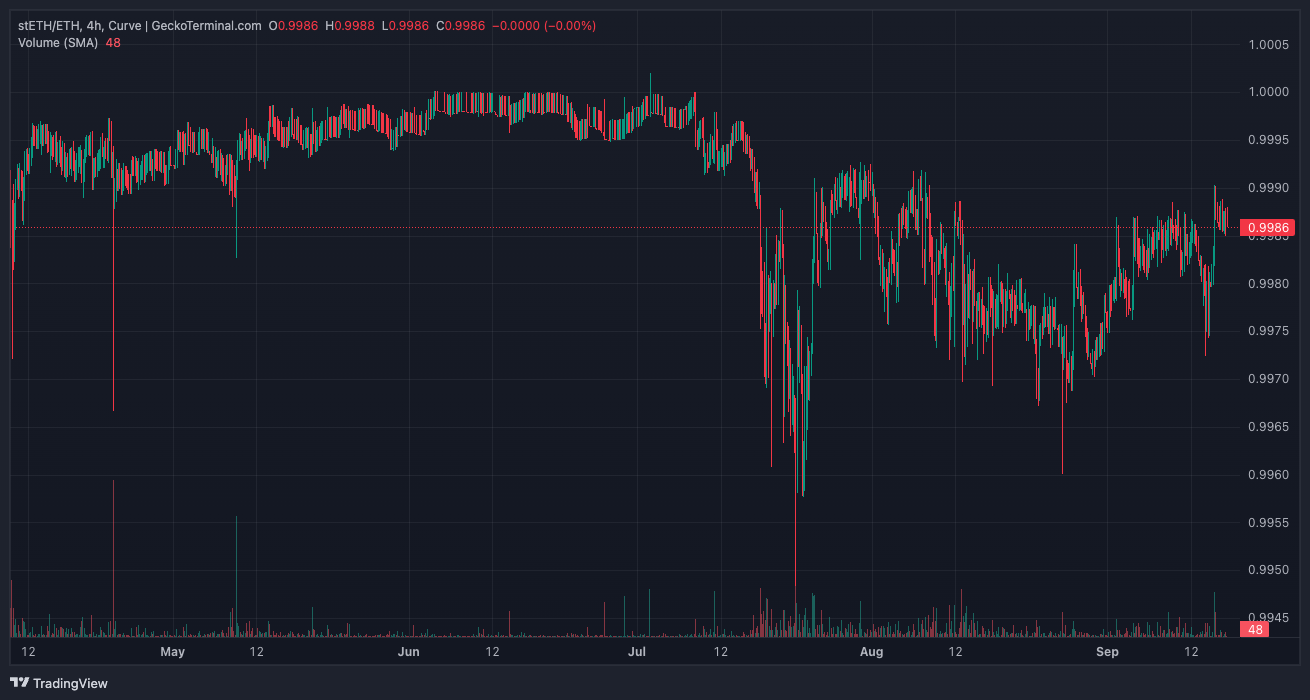
Source: Geckoterminal, 16th September 2025.
This slight de-peg, combined with extended withdrawal queues on the consensus layer, highlights the need for a substantial liquidity buffer within Aave. This buffer is crucial as it allows LPs to withdraw their ETH without forcing leveraged users to unwind their positions, which could otherwise further destabilize the LST/LRT pegs.
Impact of Proposed Changes on Available Liquidity
While the goal of lowering Slope1 is to encourage borrowing and increase utilization, it’s essential to understand the trade-offs. We modeled the proposed parameter changes to assess their impact on the available WETH liquidity if the borrow rate remained at its current level.
Our analysis shows that the proposed changes, while making borrowing cheaper at lower utilization, would reduce the available liquidity buffer at the current market rate.

Source: LlamaRisk, 16th September 2025.
While the market will eventually find a new equilibrium, this reduction in immediate capacity underscores the need for a cautious implementation. A sudden, large incentive to borrow could rapidly consume this smaller buffer and push rates up sharply, leading to volatility.
Recommendation
Based on this analysis, a cautious and incremental approach is the most responsible path forward. We think monitoring LST/LRT peg stability is important—before committing to further reductions.