[ARFC] $AAVE token alignment. Phase 1 - Ownership

We are criticizing actions, not people, and that is exactly what we did. The way you are framing this could lead people to believe that Aave Labs would be doing a “gift” to the Aave DAO by sharing frontend fees, but that is factually incorrect. No one here is attempting to undermine the contributions of Aave Labs.. Aave Labs and Stani are unquestionably GOATed

What we are criticizing is the fact that Aave Labs is monetizing a product that was funded by the Aave DAO and therefore belongs to the DAO. At best, Aave Labs could request an annual budget from the DAO to operate and maintain this frontend. What is not acceptable is unilaterally implementing fees that flow into the pockets of Aave Labs without explicit authorization or rights granted by the Aave DAO.

Additionally, swap adapters are a very straightforward piece of code. It is unclear what kind of “upgrades” are being referenced here. If the projected annualized revenue has increased significantly, that growth is the result of the collective efforts of all service providers and the broader adoption of Aave as a protocol, not just the addition of a fancy frontend widget

5 Likes

As a delegate and service provider within the Aave DAO, we work closely with other service providers, investors, and delegates, and would like to share our perspective on the proposed transfer of brand, trademarks, and intellectual property from various service providers to a dedicated entity.

We support the strategic alignment of the Aave brand, trademarks, and intellectual property with $AAVE token holders, as outlined in the Aave 2030 roadmap. The current proposal is disconnected from the intended roadmap whilst reflecting a high-level, directional expression of intent with the material implementation details deferred to the future. In our view, this aligns more closely with the purpose of a TEMP CHECK rather than an ARFC. Any subsequent phase that introduces concrete legal structures, execution paths, or asset transfers should be progressed through an ARFC once sufficient detail is available given the magnitude of this proposal.

Based on the information shared by @LlamaRisk and informed by legal opinions obtained prior to commenting, we believe that the transfer of licenses, trademarks, and brand identity requires a carefully structured and professionally governed process. Within the DAO, only a limited number of stakeholders possess the requisite legal and operational expertise to oversee such a transition. As such, we strongly recommend that the in-house legal counsel of both LlamaRisk and Aave Labs be deeply engaged throughout the process.

While it may be possible to manage this process internally, given the context, visibility, and precedent this action would set for the broader industry, we believe it would be prudent to engage an independent legal firm with appropriate experience. This firm should be mandated to scope and advise on the transfer together with the legal counsel’s of both LlamaRisk and Aave Labs. Given the significance of the outcome, it is reasonable to expect that any resulting legal analysis or recommendations, once made public, would be subject to rigorous external scrutiny.

As highlighted by @sakulstra, this proposal affects the work of multiple service providers, not solely Aave Labs, whose contributions may ultimately be transferred to a new entity. The outcome of this discussion has implications for all service providers and therefore warrants deeper, more explicit discussion around the scope of services currently being delivered.

Of particular importance is the ownership and governance of the aave.com and app.aave.com websites. These assets sit at the intersection of protocol strategy, product strategy, and brand stewardship, and any changes to their control raise broader questions regarding the long-term vision and operating model of Aave. Deciding how these assets are operated sets a precedence for future innovation amongst builders within the community.

In summary, given the legal and operational complexity of what is being proposed, we believe the proposal should be amended prior to advancing to a vote. We respectfully suggest the following:

  • Reclassify from ARFC to TEMP CHECK: This more accurately reflects the current high-level, directional nature of the discussion.
  • Assign Clear Ownership: In the absence of defined Phase II owner (or owners), a named lead or accountable owner should be appointed to coordinate the initiative, define scope, and outline concrete next steps before escalation to an ARFC.

We believe these changes will strengthen the governance process and materially reduce execution and legal risk for the DAO.

We recognise that this is a complex and sensitive moment for all parties involved. We are confident that, through deliberate governance and good-faith collaboration, the DAO and relevant stakeholders can align on a solution that best serves the long-term interests of Aave.

20 Likes

I also think that operational management is complex, but that does not change one key factor: alignment of objectives.

I suggest a proposal to address the problem without creating an additional structure.

  1. The compensation plan with Aave Labs should be token-only with vesting. Any liquidity needs can be covered through the Aave lending platform.

  2. All payments between the DAO and Labs must be fully transparent.

  3. This is not required, but as a good-faith signal, publishing Aave Labs’ financial statements would reinforce trust with the community. All related companies in the holding

2 Likes

Very well said 🤌🏻aave.com and app.aave.com are founded by Aave Dao!! With what logic this is not a temp check?!! This is the decision that will determine the whole future of “DeFi” industry , let’s make it right let it be true “decentralized finance“ by the people for the people.

You described the situation best way possible ,i totally agree💯 this is the conflict of interest between token holders and equity holders , and the truth is Aave(ethlend) founded using ICO method ! I was one of the participants! And i added to my holding bag since ethlend listed in exchanges. most definitely Aave Labs and other contributers did a lot of key works that made Aave most reliable lending borrowing protocol by far but the DAO / token holders are what made that even possible at the first place i saw some really disappointing tweets from Emilio , and it seems like Stani support the idea too which makes me think these guys never believed in DAO idea. Anyway this had to be a temp check by all means !

6 Likes

TLDR
The protocol has grown massively, but the token has barely moved relative to its 5-year average. This suggests a failure in value capture, which is exactly what the DAO is supposed to address.

1 Like

What would the DAO do with this IP?

Would they use it to engage in business development like Aave Labs has done with great success?

Would they use it to build and maintain what is arguably the most important frontend in all of crypto like Aave Labs has done?

It turns out we don’t own a brand and look at our TVL.

It’s about ownership. Should IP belong to Labs’ private shareholders or the token holders who’ve funded Aave since the ICO? This sets either a powerful precedent for DeFi or a catastrophic one.
Simple solution: DAO owns the IP, licenses it to Labs for operations.
This is an economic conflict, but Labs refuses transparency—no cap table disclosure. If Labs were non-profit, there’d be no issue. MakerDAO addressed this with a Foundation. Morpho learned and structured everything through a shareholder-free entity from day one.
Avara wants equity upside without token holder ownership. That’s the real issue.

4 Likes

Hi frens. I’ve collaborated with many posters on this topic since the ETHLend ICO, mostly as a user of the protocol and a friend of the team, with some formal collaboration with FireEyes at the beginning of the AAVE journey.

This proposal comes at an interesting time in the history of DAOs. With the Unification proposal from Uniswap and the ENS DAO Retrospective proposal from ENS - The industry seems to be stuck in the mud with how to push decentralised coordination forward.

I understand this proposal is specifically about the AAVE DAO / token holders regaining full control of Aave’s brand. But I believe that this is a wider breakdown of communication, goals and vision of what Aave is, and how the token interfaces with ‘it’.

Some statements we all (hopefully) agree with:

  • The Aave protocol is objectively the best lending market in Ethereum and the entire industry.
  • Immense work has already been done, with years of contribution from countless people building the Aave protocol, brand, network and industry impact.
  • There’s still a significant amount of work to be done in order to onboard the entire world to permissionless smart contract based lending markets.
  • This work will take many contributions from countless different humans over decades to eventuate.
  • The ability to use Aave IP is useful for contributors to drive growth and impact.

Finally as a statement we agree with; Despite the challenges that are being felt here, the Aave DAO is objectively & measurably one of the most functional DAOs out of the millions of ‘DAO’ experiments over the past 10 years.

A lot of the industry (especially recent VC noise) if you were to ask right now, would tell you DAOs are completely dead and to give up on them. I disagree. I believe by allowing humans with a shared vision to permissionlessly coordinate with one another they are objectively more productive than traditional organisations and create a new and unique type of unstoppable growth machine. Now, does this mean I believe that we shouldn’t have core teams driving specific successes and impact? No, not at all, I believe it’s about empowering them in a way that makes sense.

I know @eboado & BGD Labs, @MarcZeller & ACI, @stani & Aave Labs and MANY other contributors have done an incredible amount of work over years to get the protocol, the DAO and the token to where they are today.

The two things that this proposal brings up:

  1. Decentralised coordination is hard, running a business is hard, running a business where you rely on decentralised coordination for funding and clarity around branding is very hard. Arguably harder than building a Lending Protocol, and we’re doing both at the same time.
  2. The question around the Aave brand, where & how it’s held, who gets to use it, under what terms, etc.

Answering either of these questions over the next week while Santa arrives is going to be extremely challenging. This post doesn’t argue we shouldn’t address these things, just that we should take our time. We’re discussing an IP proposal of a multi-billion dollar organisation, lets treat it that way;

On 1; Almost all large tokens have relied on the same governor contract for far too long - this reliance and lack of innovation is what has landed us here. In my opinion, token voting isn’t actually as bad as it’s often parrotted on crypto twitter. But using it as the only voting method for all decisions has led us to where we are today, where even the best DAOs (AAVE and ENS imo) are struggling with decision making, DAO politics and distain between contributors.

If you believe in permissionless contribution to decentralised protocols, these are problems we have to solve. It’s been interesting to champion a ‘DAO Retrospective’ idea inside of ENS; I genuinely believe that working with organisations like MetaGov and others to map stakeholder interests, analyse spending and decision making, gather and develop shared visions is the most pragmatic step to take right now for the future of Aave. This then allows us to understand where we align and where we don’t, which structures work and which don’t, and ultimately allows the DAO to paint a new path forward, both in terms of governance and ownership.

If we want to build the best protocols, we need to build the best contribution structures and attract the best talent - and imo building a banking chain might pay well, but it’s not a structure I want to work inside of.

On 2; My perspective is that creating clear structures and boundaries for how the Aave brand is used, while also ensuring that core contributors (such as Aave Labs) can continue to leverage the brand in a non-restrictive way is incredibly important. CC @dennisonbertram’s comments above, we don’t want IP management to be a blocker to institutional conversations and partnerships. I know for a fact many founders struggle with this, a token is one thing, unclear structures around IP use is a tradfi lawyer’s worst nightmare.

So! That was a lot of words, what shall we do? FireEyes’ first perspective is, that this isn’t a small problem to solve and I don’t think a vote in the coming days (or even X weeks) is the best immediate next step. I think taking time to reflect on both 1. and 2. (and other considerations I’ve definitely missed) over the holiday period is the immediate step I’d propose and would argue will lead to a better outcome for the Aave Protocol, DAO and its contributors.

Then, continuing to develop this proposal to be a type of ‘RFP signalling post’ where input can be gathered around:

  1. The best legal structure & jurisdiction to hold the IP as well as proposed rules around use & management of the IP by certified IP users.
  2. Develop a clear understanding of what a ‘certified IP user’ is, what they’re able to do, what they can’t do, etc, etc.

Again, we’re talking about the IP ownership of a multi-billion dollar organisation, spending meaningful time on a well thought out and designed proposal and structure here makes sense. I think more clarity around how Aave Labs can use the IP as well as how a broader set of contributors could also use the IP is a productive and meaningful step for the DAO and token. However rushing this process presents significant risk to how the Aave continues to drive contribution and is perceived by the wider market.

Super happy to contribute further to this discussion and proposal. I do think a moderated community call where these ideas can be talked about rather than forum’ed about is an important next step. It’s clear that everyone involved this discussion is aligned with the success of Aave, thus why we’re all here writing! :ghost:_ :ghost:

3 Likes

Greetings Aave community,

After five days of extensive discussion on this proposal, it is clear that this topic would benefit from a formal governance decision. We have seen significant engagement from tokenholders, service providers, and delegates.

Given the nature of this proposal and its focus on Aave Labs, we have initiated a Snapshot vote for the ARFC: ‘$AAVE token alignment. Phase 1 - Ownership’. This will allow tokenholders to formally express their position and provide clarity on the path forward.

We believe a vote will help bring resolution to this discussion, regardless of the outcome. The community has dedicated substantial time and energy already, and a formal decision will allow everyone to refocus on building and growing Aave.

The Snapshot vote is now live and, after a 24-hour period, will run for 3 days. We encourage all AAVE tokenholders to participate.

Link to Snapshot: https://snapshot.org/#/s:aavedao.eth/proposal/0xbc606159ddeae0184c2086055637d3f357351ec0adc4c9f4150751bc41918eba

Aave Labs

17 Likes

Talking is always easier than doing. Difficulty alone is not the right metric — what matters is how much revenue an improvement actually brings.

The fact is that neither the DAO nor other service providers identified this optimization opportunity. That is why I see no issue in calling it an upgrade.

Why do the members of AAVE labs think that it is ACI that is causing AAVE to lose control? Why did the perpetrators become victims? Many holders of AAVE do not know what AAVE labs and Stani have done. Let me help you sort this out:

  1. AAVE labs and Stani wanted to issue the horizon token, but it was rejected by the DAO.
  2. AAVE labs planned to do RWA, and horizon was supposed to hold 80% of the profits. This was also rejected by the DAO. They were too greedy.
  3. The development budget for AAVE V4, AAVE labs wanted to reach an astonishing 20 million US dollars. Many people thought it was too expensive, but it was still approved.
  4. Now AAVE labs has secretly modified the code, reducing the income for the AAVE Dao, increasing their own income, and then lowering the user experience.

I have a few questions. Could someone please answer them?

  1. Clearly, it was the DAO’s interests that were blatantly and unscrupulously taken over by AAVE Labs and Stani. Why do you distort the facts and turn the perpetrators into victims?
  2. Why could AAVE Labs and Stani act as they pleased when they were seizing the DAO’s interests, modifying the code at will? But when faced with the doubts and questions from everyone, the discussion lasted for so many days, yet they didn’t give any answers. How arrogant is that?

If Aave Labs and Stani think that DAO is getting in their way, then that’s their own fault. That’s what they deserve. It’s because they broke the harmony and balance. It’s because they took advantage of DAO’s interests for the first time, second time, third time, and fourth time!! It’s because they made everyone lose trust!!

All those who hold AAVE tokens, unite! I myself have held AAVE since the ICO in 2017. I have never participated in any voting. I will support: The trademarks, IP, brand, etc. of AAVE should all belong to the DAO.

This is a warning to AAVE Labs, Stani, and all AAVE service providers:

  1. If as the founder, you infringe upon the interests of shareholders and become a publicly traded company in the United States, you will face huge fines and criminal lawsuits. Don’t think that blockchain is a lawless place. The relevant regulations and legal policies will definitely be implemented. Please remember: The founder of FTX has not been released yet.
  2. DeFi and RWA are destined to become important milestones in human history. As participants, do you want to be remembered for your achievements, or do you want to be condemned by future generations?
6 Likes

We acknowledge the unilateral decision by @AaveLabs to escalate this proposal to the Snapshot vote stage despite unresolved discussion, an absence of clear consensus, and repeated refusals to address direct, concrete questions raised by delegates and token holders.

This escalation was compounded by process and timing choices that will materially reduce potential community participation:

  • It was done without informing or obtaining consent from @eboado, the proposal author.
  • It was pushed during the holiday period, which multiple large holders, investors, and institutions have flagged as one of the worst windows for a high-stakes governance vote given internal coordination constraints.
  • It followed a recent wave of delegations to new or previously inactive delegates with significant voting power. Delegations are legitimate by design, but the timing and concentration add to the perception of a rushed escalation optimized for outcome rather than legitimacy.
  • Official Aave communication channels relayed this debate only after escalation to Snapshot. Because voting power is snapshotted at vote creation, late amplification materially reduces the ability of the broader community to mobilize, withdraw voting power from CeFi or L2s if needed, delegate, and form an informed opinion. A non-trivial portion of the community is likely learning about this debate only now, after the snapshot has already been taken.

What started as a push for clarity and a more fair relationship between token holders and the current stewards, instead of today’s asymmetric dynamic, is now turning into a hostile takeover attempt by Labs.

This did not have to escalate this way. Avara could have materially reduced the risk by engaging differently earlier in the process. When initial concerns were raised about a lack of communication, a direct response and a clear commitment to engage on substance would have helped. Instead, the discussion drifted into dismissiveness, deflection, and a communications approach that many token holders perceived as contemptuous of legitimate concerns. That dynamic created noise and confusion, and made it harder for the community to form an informed view in a neutral environment.

Most importantly, this could have been de-risked by supporting a structured path: treat this proposal as phase one (a mandate), and publicly commit to phase two (a good-faith negotiation on terms) with the DAO, service providers, and delegates. Answering direct questions concisely, committing to sit at the table for phase two, and ensuring official channels provided timely, neutral visibility before escalation would have strengthened legitimacy and avoided the current adversarial posture.

The Snapshot vote has not opened yet, but whatever the outcome, $AAVE token holders will have clearer visibility into the intent, posture, and methods of @AaveLabs. The market’s valuation model and public perception will adjust accordingly.

Ultimately, when the DAO is not respected and legitimate concerns from token holders are ignored, rational actors switch to the most efficient way to vote: with their bags.

A truly sad outcome, and one that was entirely preventable.

17 Likes

This type of action breaks all types of trust of the community. To be very clear about it:

  • Aave Labs has, for some reason, decided to rush to vote unilaterally my proposal, presenting it as mine on Snapshot, and without asking me about it.

  • I would have never approved it, because there is still an open discussion on this forum, with additions/corrections to potentially include (from form to content). And I would keep all in mind in my final Snapshot/on-chain proposal.

  • Public governance is supposed to be for open, even if hard, discussions. Trying not to respect basic rules of conduct is disgraceful.

  • For me, the current Snapshot proposal created by Labs is nonexistent. I suggest people to vote ABSTAIN if they believe in governance procedures, as participation only gives legitimacy to terrible practices.

22 Likes

@AaveLabs also unilaterally decided to use Snapshot instead of an on-chain vote, despite the proposal author explicitly requesting an on-chain vote due to historically higher participation with this method.

Combined with the points highlighted by @MarcZeller, @aavelabs snapshot constitutes a shadow governance move and a poor precedent for the ecosystem especially given the importance of this vote.

We will follow the proposal author @eboado’s recommendation and cast an ABSTAIN vote, and we invite the community to consider doing the same, or simply not voting at all.

Participating would confer legitimacy on a process we view as illegitimate and would further harm the DAO.

The posture displayed throughout this escalation, including dismissing direct questions and rushing the process, reads as contempt for token holders’ legitimate concerns and for DAO due process.

If @stani wants to force a takeover, he should do so alone, without our consent or participation.

8 Likes

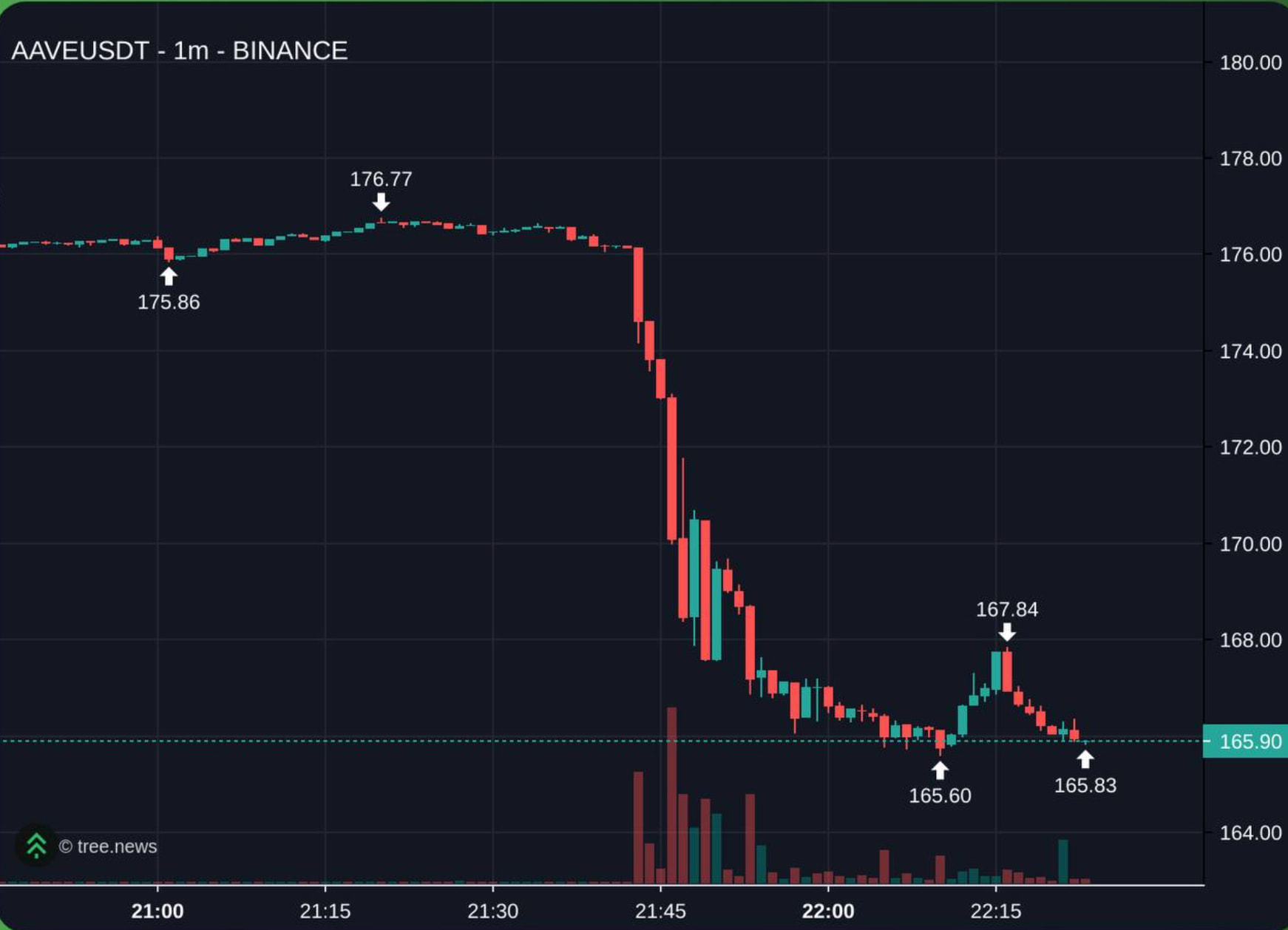
After this post was published, multiple media outlets reported on it last week. I do not believe the public was unaware of the situation — the crypto communities I am familiar with were very well informed.

Personally, I sold roughly half of my AAVE last week, converted it into UNI, and added it to the AAVE–UNI LP. The reason was that some DAO service providers attempted to change the status quo, ignored the risks, and blindly pursued “DAO rights,” escalating a minor issue into a revolution. That level of risk was unacceptable to me.

This had nothing to do with Aave Labs pushing the proposal to the Snapshot stage. The 37M sell-off occurred several hours before the Snapshot. Please verify the timeline. What you stated is a misrepresentation of the facts.

6 Likes

Your interpretation of the current Aave controversy is completely divorced from the essence of the facts, and three key fallacies must be clarified:

First, the so-called “the public is not uninformed” is only the self-perception of the core circle. Most retail investors only learned about the incident after the AAVE token plummeted, and the official has never effectively synchronized information with ordinary investors. The problem of delayed information disclosure is real, and it is not what you call “the whole community is informed”.

Second, the $37 million sell-off has nothing to do with AaveLabs advancing the proposal. Although the sell-off occurred hours before the snapshot, it was the total outburst of emotions caused by the team’s long-term disregard for community demands and avoidance of core issues. The advancement of the snapshot was only the trigger, and the whale sell-off was essentially a protest against unfair governance.

Third, DAO community members are by no means “causing trouble”. Initiating proposals and requiring the team to respond to reasonable demands are legitimate rights endowed by the DAO to the community. Core assets such as intellectual property rights and traffic portals should belong to the DAO as a whole, and the community is only claiming its legitimate rights and interests. More importantly, the community had full trust in the team before, but the team has repeatedly taken excessive actions: its previous attempt to issue RWA tokens was opposed by the community, yet it still refused to restrain itself; this time, the Cow Swap handling fees were directed to the team’s private address; coupled with the forced advancement of the snapshot vote without reaching a consensus, it is precisely the team’s continuous disregard for the community that has led to the total outburst of contradictions, which is by no means the community causing trouble unilaterally.

9 Likes

Voting on significant matter should not be rushed during holiday seasons. Instead, ample time should be given to all stakeholders to learn what is being discussed, voted on, and respective outcomes.

9 Likes

This whole discussion has and is being dealt with terribly so far by the Aavelabs team. There are still many key issues that have been totally ignored or just not discussed. Absolutely abysmal PR and communication. This does not inspire confidence for tokenholders.

5 Likes