[ARFC] Launch GHO on Linea & Set ACI as Emissions Manager for Rewards


Title: [ARFC] Launch GHO on Linea & Set ACI as Emissions Manager for Rewards
Author: TokenLogic
Created: 2025-08-18


Summary

This publication proposes deploying GHO on the Linea blockchain and appointing ACI as the Emissions Manager for both GHO and aGHO. The goal is to position GHO as the dominating decentralized stablecoin within Linea’s ecosystem.

Motivation

Linea is a high-performance, EVM-equivalent zk-rollup developed by ConsenSys, offering ultra-low fees, fast finality, and deep integration with Ethereum infrastructure such as Infura and MetaMask.

Aave V3 has already launched on Linea, enabling increased DeFi adoption and liquidity flow. Linea is now launching Native Yield, an innovative mechanism that auto-stakes bridged ETH via Lido v3 stVaults, channeling staking rewards into DeFi liquidity incentives on Linea.

Deploying GHO on Linea in concert with these momentum initiatives ensures GHO becomes a foundational stablecoin, enabling synergies with liquidity programs, boosting peg stability, and expanding GHO’s on-chain utility.

Specification

Roles and Responsibilities

Service Provider Responsibility
TokenLogic Deploy GHO infrastructure and bridging components
TokenLogic Configure Facilitator, GSM, and Steward logistics
Chaos Labs + LlamaRisk Review initial risk parameters tailored to Linea
BGD + Aave Labs Review Pull Requests ahead of voting submission
Certora Cold Review / Audit of Pull Requests
ACI + TokenLogic Design incentives and distribute emissions
Aave Liquidity Committee Coordinate GHO liquidity across Linea DEXs
GHO Stewards Maintain risk parameters post-deployment

ACI Multi-sig Address: 0xac140648435d03f784879cd789130F22Ef588Fcd
Gho Stewards Address: 0x8513e6F37dBc52De87b166980Fa3F50639694B60


GHO Parameters for Aave v3 on Linea

Parameter Value
Asset GHO
Market Linea
Isolation Mode No
Borrowable Yes
Collateral Enabled No
Supply Cap 5,000,000
Borrow Cap 4,500,000
Variable Base 0%
Variable Slope1 5.5%
Variable Slope2 50%
Uoptimal 90%
Reserve Factor 10%
Stable Borrowing Disabled
Flashloanable Yes
Siloed Borrowing No

Facilitator & Bridging Configuration

Deploy a GhoDirectMinter facilitator on Ethereum to support issuance for Linea.

  • Mint Cap: 15M GHO

Bridge Configuration (e.g., via CCIP or similar):

  • Bucket Capacity: 15M GHO
  • Inbound Capacity: 1.5M GHO
  • Outbound Capacity: 1.5M GHO
  • Refill Rate: 300 GHO/sec

GSM Parameters (stataUSDT0.linea)

Parameter Value
GHO Bucket Cap 10M GHO
USDT Exposure Cap 5M
Freeze Lower Bound $0.990
Freeze Upper Bound $1.010
Unfreeze Lower Bound $0.995
Unfreeze Upper Bound $1.005
Mint GHO Fee 0%
Burn GHO Fee 0%

USDT deposits into stataUSDT0.linea trigger GHO transfers using Ethereum-held inventory via GSM.


GHO Steward Configuration

GhoAaveSteward

  • updateGhoBorrowCap: ±100%
  • updateGhoBorrowRate: ±5% on optimalUsageRatio, baseVariableBorrowRate, variableRateSlope1, variableRateSlope2
  • updateGhoSupplyCap: Up to +100%

GhoGsmSteward

  • updateGsmExposureCap: ±100%
  • updateGsmBuySellFees: ±0.5% per side (FixedFeeStrategy)

Both stewards remain callable only by the GHO steward protocol.


Budget

Initial capital will be deployed on Ethereum and bridged to Linea via the facilitator to support liquidity and incentive programs. Exact SAFE address to be specified in an upcoming AIP.

Disclaimer

TokenLogic receives no compensation for drafting or coordinating this ARFC.

Next Steps

  1. Gather feedback from the community.
  2. If consensus is reached on this ARFC, escalate this proposal to the Snapshot stage.
  3. If Snapshot outcome is YAE, escalate this proposal to the AIP stage.

Copyright

Copyright and related rights waived via CC0.
3 Likes

Summary

LlamaRisk supports launching GHO on the Linea network. The proposed initial parameters are consistent with the initial deployments on established L2s like Arbitrum and Base, representing a measured approach to expansion.

The introduction of Linea’s Native Yield mechanism, which channels staking rewards from bridged ETH into the ecosystem, presents a compelling opportunity for GHO’s expansion on Linea’s DEXs. Even though this mechanism introduces additional dependency and rehypothecation risks, these risks would be managed by active exposure management proposed by the Linea team. Therefore, we support the proposed parameters and strategy by TokenLogic, which would allow GHO to scale safely as demand materializes.

Cross-Chain Progress & Market Sizing

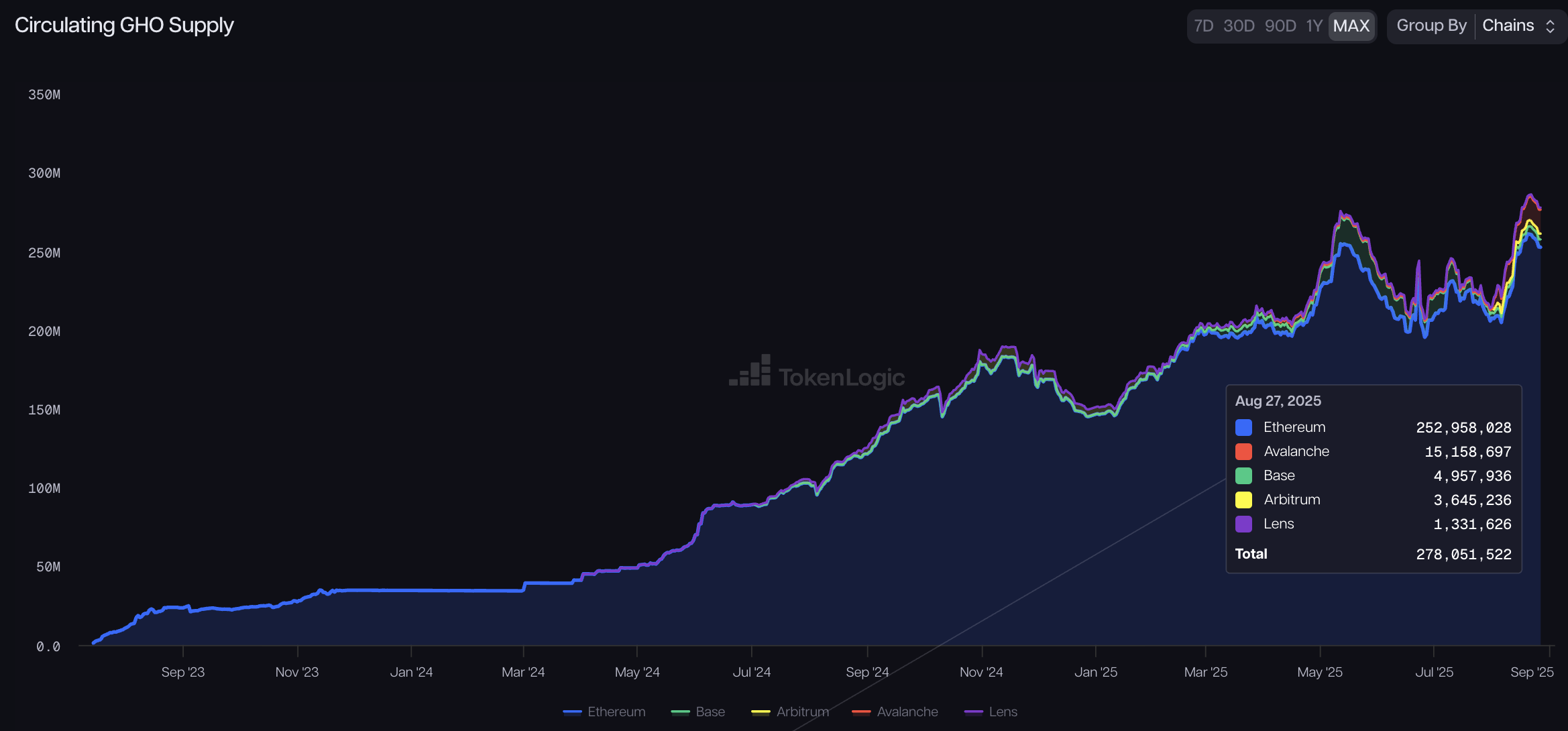
Since GHO’s cross-chain deployments began, GHO has grown to 280M total supply, with ~26M GHO residing on the supported L2s. The Avalanche market has seen the most success, while the Base market has contracted over time.

Source: TokenLogic GHO Dashboard, August 27, 2025

The proposed initial market size for GHO on Linea is well-justified compared to previous successful deployments. At the time of GHO’s launch on Arbitrum and Base, the Aave v3 markets on those chains had a TVL that was in line with Linea’s current Aave v3 market size of $526M, suggesting a comparable initial demand for GHO borrowing and justifying the proposed caps and incentive strategy.

Current Health of GHO

After the renewed positive market conditions and increased leverage strategies, GHO’s secondary market peg was temporarily affected, reaching a discount of up to 30 bps in late July. Slight increases in GHO borrow rates and a bump in Aave Savings Rate helped to contain the outflows and reduced secondary market pressure, with GHO now back to 10 bps (0.1%) peg bounds.


Source: CoinMarketCap, August 27, 2025

On Ethereum, GHO currently possesses a 37M sell buffer within 30 bps (0.3%) price impact, suggesting that a selling pressure of more than 10% of the total supply would be needed to destabilize the peg again.

Potential Use Cases on Linea

The introduction of Native Yield on Linea presents a unique argument for GHO adoption. As users bridge ETH that automatically earns staking rewards via Lido v3 stVaults, there will be a natural demand to borrow against this productive collateral. GHO is well-positioned to be the stablecoin of choice for these operations, especially as the Aave v3 market on Linea only has USDC and USDT onboarded on the stablecoin side. GHO DEX integrations and incentives are also expected to improve GHO’s expansion among other yield venues on the Linea network.

Linea Yield Venues

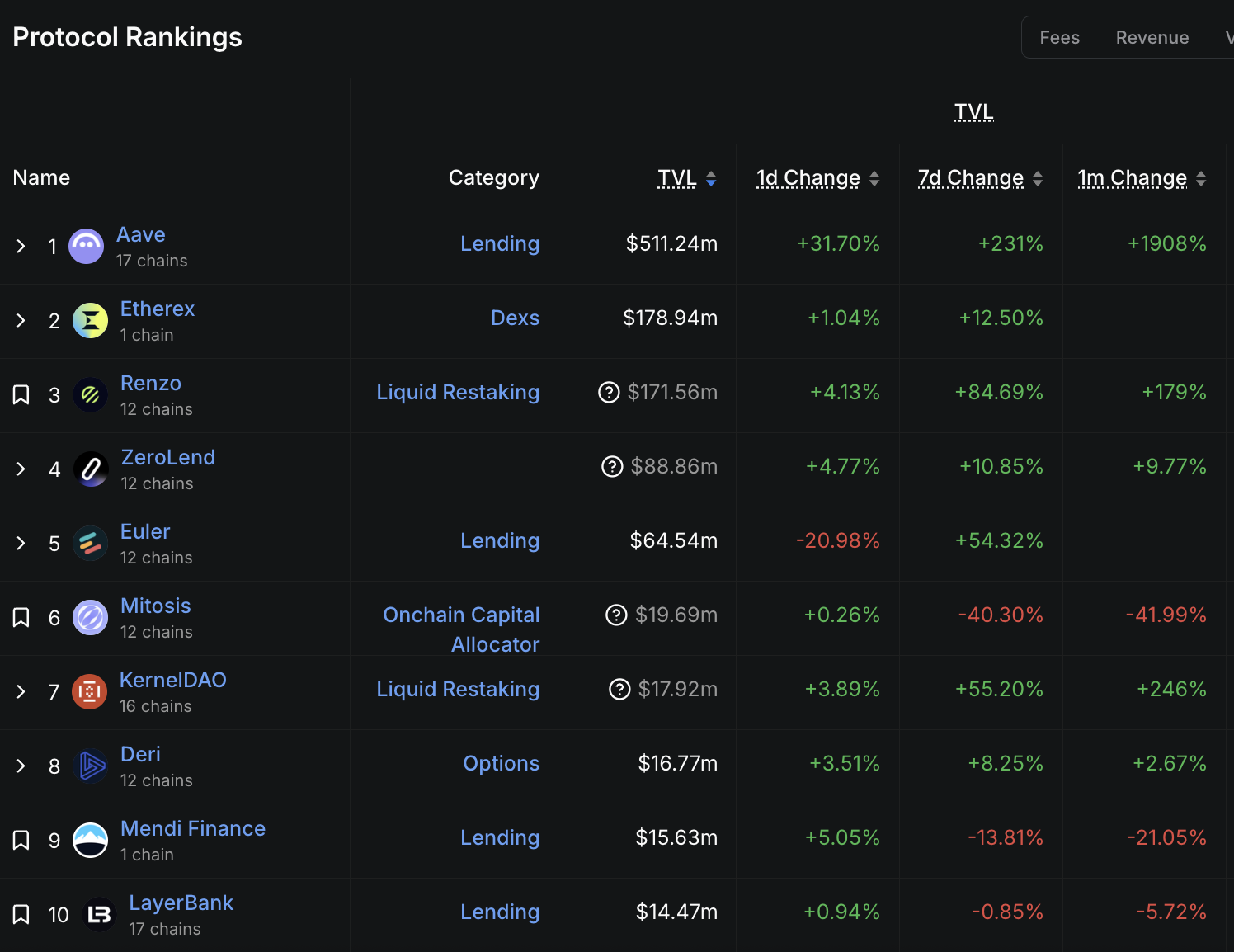
Currently, Aave is a dominant yield venue on Linea, with Etherex permissionless DEX being the largest notable liquidity venue. As GHO is onboarded, part of the supply will likely flow to the DEXs, where new GHO liquidity pools would be bootstraped. Given the dominance of lending protocols on this chain, the potential for other external yield integrations is currently unclear.


Source: DefiLlama, August 27, 2025

The largest pools of the Etherex exchange are pairing ETH, LSTs/LRTs, and stablecoins. This liquidity profile is suitable for GHO adoption, as ETH and ETH derivatives are also prevalent GHO collateral assets on Mainnet.


Source: Etherex DEX, August 27, 2025

Disclaimer

This review was independently prepared by LlamaRisk, a community-led decentralized organization funded in part by the Aave DAO. LlamaRisk is not directly affiliated with the protocol(s) reviewed in this assessment and did not receive any compensation from the protocol(s) or their affiliated entities for this work.

The information provided should not be construed as legal, financial, tax, or professional advice.

1 Like

Summary

Chaos Labs supports the launch of GHO on the Linea instance. The deployment has demonstrated rapid and sustained growth, with sharp increases in stablecoin borrowing, robust liquidity conditions, and persistent demand. These dynamics establish a favorable environment for scaling GHO supply while simultaneously strengthening protocol earnings.

Market Overview

In recent days, the Aave v3 instance on Linea has expanded by approximately $800 million in supplied assets, driven largely by inflows of WETH and stablecoins such as USDC and USDT.

Stablecoin borrowing demand has been particularly strong, with USDC and USDT accounting for approximately 40% of total outstanding debt. The introduction of GHO would allow this borrowing activity to be captured within the Aave ecosystem, deepening the utility of the Linea instance and reinforcing GHO’s position in the competitive stablecoin environment.

Stablecoin Borrowing

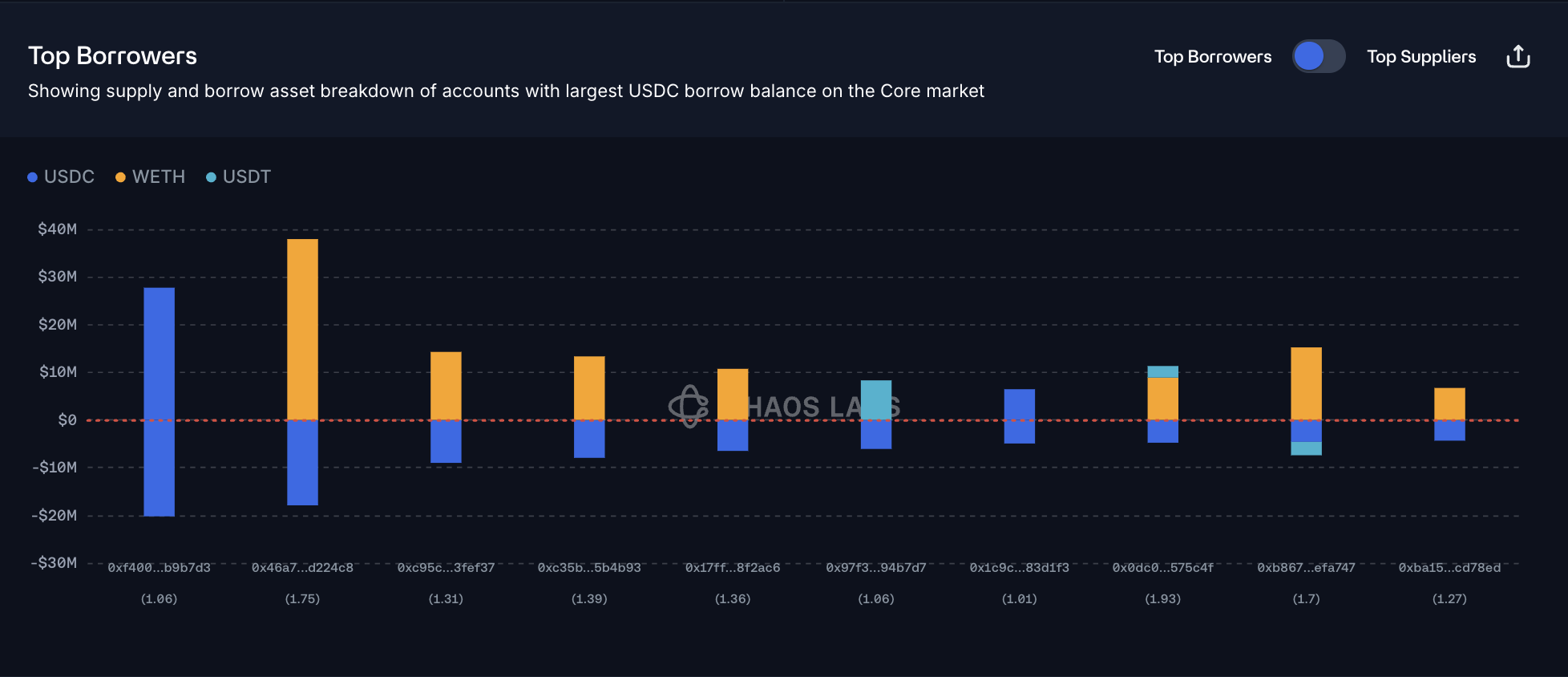
At the moment, the majority of stablecoin borrowing is facilitated by WETH collateral. The introduction of Native Yield, where bridged WETH earns staking yield, further increases the capital efficiency of similar strategies, implying additional demand for stablecoin borrowing.

Additionally, there is also evidence that a significant proportion of borrowers are using the assets to provide liquidity on Linea’s DEXs to capture elevated APYs. The availability of GHO on Linea would expand the set of stablecoins that can be deployed in these strategies, thereby facilitating additional borrowing activity. Participation is further reinforced by speculative positioning ahead of the anticipated Linea airdrop and the incentives expected to flow from the recently introduced Native Yield mechanism.

GHO Performance

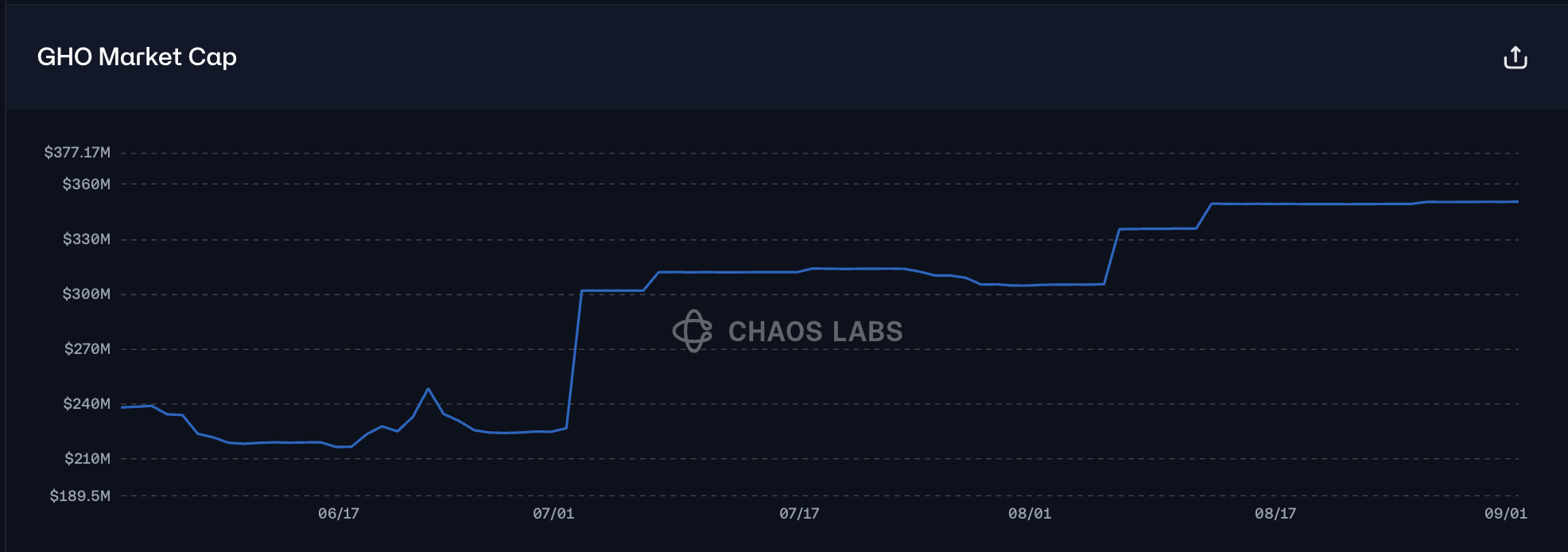
In recent months, GHO’s market cap has grown by over $100 million, primarily due to increased demand for the Ethereum Prime instance.

While GHO has traded slightly below its peg, the dislocation has been minimal, averaging approximately 10 basis points with negligible variance.

GSM Implementation

We support the implementation of a stataUSDT0 GSM, we expect sufficient supply to be available at launch. With ample supply and market liquidity, stataUSDT0 is expected to be an effective stabilization asset for the GSM, capable of absorbing fluctuations around the GHO peg. Additionally, a large and more liquid USDT0 market will help keep interest rates for borrowing and lending USDT0 more stable and less prone to sudden spikes or drops.

Steward Authority Framework

The governance framework gives GHO Stewards the authority to adjust parameters within set boundaries, achieving a balance between flexibility and prudent risk management. This structure allows for timely updates to borrow caps, interest rates, supply caps, and GSM parameters within defined limits, enabling the system to respond quickly to changing market conditions while maintaining governance oversight. Experience from previous GHO deployments shows that this approach has effectively preserved stability during the early launch phase and supported growth.

Parameter Recommendations

Considering the rapid growth of the Linea instance, the structural demand for stablecoin borrowing, which is further enhanced by the introduction of Native Yield, and the demonstrated stability of GHO’s peg, we support listing GHO with the proposed parameters on the Linea instance to facilitate additional growth. Setting the initial supply cap at 5M and the borrow cap at 4.5M provides a balanced approach, limiting risk during the early adoption phase while maintaining sufficient liquidity.

Disclosure

Chaos Labs has not been compensated by any third party for publishing this recommendation.

Copyright

Copyright and related rights waived via CC0.

This topic was automatically closed 30 days after the last reply. New replies are no longer allowed.