[ARFC] Deploy Aave v3 on Mantle

[ARFC] Deploy Aave v3 on Mantle

Author: ACI

Date: 2025-01-07


Proposal updated with latest Risk Service Providers recommendations on 2026-01-15 and also updated to include Tokenlogic’s contributions about GHO, GSM Parameters and Budget.

Proposal edited on 2026-01-19 to update the proposal with latest forum discussion. Snapshot will be posted again.

Simple summary

The current [ARFC] proposes deploying Aave V3 on Mantle Network.

Motivation

Mantle Network is an EVM-compatible Layer 2 scaling solution for Ethereum (rollup), enabling existing Ethereum contracts and tools to operate with minimal modifications. By leveraging a modular architecture, Mantle combines an optimistic rollup design with innovative data availability solutions to reduce costs while maintaining Ethereum’s security. Data availability is managed by an external DA layer, currently powered by EigenDA technology through Mantle DA, with plans to fully adopt EigenDA upon its mainnet stable launch.

By deploying on Mantle, Aave can take advantage of Mantle’s integration with Bybit products, enabling seamless access to Bybit’s 30 million active users. This creates a significant opportunity to broaden Aave’s user base and make DeFi more accessible to a wider audience.

Mantle currently boasts a TVL of approximately $570 million, while its flagship LST (mETH) holds a TVL of $1.85 billion. More details here.

Benefits of deploying on Mantle

  • Accessibility and Distribution

    As Mantle is closely integrated with Bybit, Aave’s deployment on Mantle positions the protocol in front of an expanding audience.

    • This integration creates a gateway for tens of millions of potential new users to access Aave’s lending and borrowing products, making DeFi simpler and more accessible than ever before.
  • Incentive campaigns

    Mantle’s ongoing incentive program, Metamorphosis Season 2 offers a powerful catalyst for user engagement and liquidity growth within the ecosystem.

    • Restaking mETH into cmETH, participants earn Powder—soon to be convertible into COOK, the governance token of the mETH Protocol—and gain exposure to multiple streams of yield from staking, restaking, and additional protocol rewards. cmETH also accruing value through EigenLayer, Karak, Symbiotic and Veda points.

Specification

Risk Parameters will be provided by Service Providers and this section will be updated accordingly.

ARFC updated 2026-01-15

Specification

Parameters Value Value Value Value Value Value Value Value Value Value
Asset WETH WMNT USDT0 USDC USDe GHO sUSDe fBTC syrupUSDT wrsETH
Isolation mode Yes Yes No No No No No No No No
Borrowable Yes No Yes Yes Yes Yes No No No No
Collateral Enabled Yes Yes No No No No No No No No
Supply Cap 30,000 5,000,000 50,000,000 10,000,000 20,000,000 20,000,000 20,000,000 50 70,000,000 18,000
Borrow Cap 28,000 - 47,500,000 9,500,000 17,500,000 18,000,000 - - - -
Debt Ceiling 30,000,000 2,000,000 - - - - - - - -
LTV 80.50% 40.00% - - - - - - - -
LT 83.00% 45.00% - - - - - - - -
Liquidation Bonus 5.50% 10.0% - - - - - - - -
Liquidation Protocol Fee 10% 10% 10% 10% 10% - 10% 10% 10% 10%
Variable Base 0.0% - 0.0% 0.0% 0.0% 2.0% - - - -
Variable Slope1 2.50% - 5.0% 5.0% 5.25% 3.0% - - - -
Variable Slope2 8.00% - 10.0% 10.0% 12.0% 40.0% - - - -
Uoptimal 90.0% - 90.0% 90.0% 85.0% 90.0% - - - -
Reserve Factor 15% - 10% 10% 25% 10% - - - -
Stable Borrowing Disabled Disabled Disabled Disabled Disabled Disabled Disabled Disabled Disabled Disabled
Flashloanable Yes Yes Yes Yes Yes Yes Yes Yes Yes Yes
Siloed Borrowing No No No No No No No No No No
Borrowable in Isolation No No Yes Yes Yes Yes No No No No
E-Mode 5 - 1, 2, 3, 4 1, 2, 3, 4 1, 2, 3, 4 1, 2, 4 1 3 4 5

E-Mode Configurations

sUSDe Stablecoins #1

Parameter Value Value Value Value Value
Asset sUSDe USDe USDT0 USDC GHO
Collateral Yes Yes No No No
Borrowable No No Yes Yes Yes
Max LTV 90.00% 90.00% - - -
Liquidation Threshold 92.00% 92.00% - - -
Liquidation Bonus 4.00% 4.00% - - -

USDe Stablecoins #2

Parameter Value Value Value Value
Asset USDe USDT0 USDC GHO
Collateral Yes No No No
Borrowable No Yes Yes Yes
Max LTV 90.00% - - -
Liquidation Threshold 93.00% - - -
Liquidation Bonus 2.00% - - -

fBTC Stablecoins #3

Parameter Value Value Value Value
Asset fBTC USDT0 USDC USDe
Collateral Yes No No No
Borrowable No Yes Yes Yes
Max LTV 75.00% - - -
Liquidation Threshold 79.00% - - -
Liquidation Bonus 8.00% - - -

syrupUSDT Stablecoins #4

Parameter Value Value Value Value
Asset syrupUSDT USDT0 USDC GHO
Collateral Yes No No No
Borrowable No Yes Yes Yes
Max LTV 90.00% - - -
Liquidation Threshold 92.00% - - -
Liquidation Bonus 4.00% - - -

wrsETH Correlated #5

Parameter Value Value
Asset wrsETH WETH
Collateral Yes No
Borrowable No Yes
Max LTV 93.00% -
Liquidation Threshold 95.00% -
Liquidation Bonus 1.00% -

CAPO

Asset maxYearlyRatioGrowthPercent ratioReferenceTime MINIMUM_SNAPSHOT_DELAY
syrupUSDT 8.45% Monthly 7
sUSDe 15.19% Monthly 14
wrsETH 6.67% Monthly 14

GHO Stablecoin

Facilitator & Bridging

Mint an additional new 20M GHO to fund the remoteGSM on Mantle.

  • OwnableFacilitator Mint Cap: 100M GHO (No change from Plasma proposal)
  • Additional Mint: 20M GHO (additional to Plasma Mint)

GhoReserve

Deploy GhoReserve on Mantle to hold bridged GHO initially.

Configure stataUSDT0 GSM as an entity with a draw capacity of 20M GHO.

Deploy a GhoDirectMinter facilitator on Ethereum to enable GHO issuance for Mantle.

  • Mint Cap: 20M GHO

As required, future Minting of GHO on Ethereum, to be supplied into the remoteGSM on Mantle, will be performed via direct submission of AIPs.

CCIP Bridge Configuration:

  • Bucket Capacity: 20M GHO
  • Inbound Capacity: 1.5M GHO
  • Outbound Capacity: 1.5M GHO
  • Refill Rate: 300 GHO/sec

Currently, the CCIP Bridge to Mantle Network is v1.5 and requires upgrading to v1.6 before GHO lanes are to be established. TokenLogic will work closely with Chainlink to sync upgrade timelines and extend the new GHO lanes to/from Mantle.

GSM Parameters (stataUSDT0)

Parameter Value
GHO Bucket Cap 10M GHO
stataUSDT0 Exposure Cap 8.5M
Freeze Lower Bound $0.990
Freeze Upper Bound $1.010
Unfreeze Lower Bound $0.995
Unfreeze Upper Bound $1.005
Mint GHO Fee 0%
Burn GHO Fee 0.15%

USDT deposits into stataUSDT0 trigger GHO transfers using Ethereum-held inventory via GSM.

GHO Steward Configuration

GhoAaveSteward

  • updateGhoBorrowCap: ±100%
  • updateGhoBorrowRate: ±5% on optimal usage ratio, base variable rates, slopes
  • updateGhoSupplyCap: Up to +100%

GhoGsmSteward

  • updateGsmExposureCap: ±100%
  • updateGsmBuySellFees: ±0.5% per side (FixedFeeStrategy)

Both stewards remain callable only by the GHO steward protocol.

Budget

The Aave and Mantle teams will each provide incentive budgets to support the growth of Aave Protocol for the initial 6-month period post-launch, subject to achieving growth expectations and prevailing market conditions.

  • Mantle: 8M units of MNT value at around 8.8M USD, assuming MNT is trading at $1.10ea.
  • Aave DAO: To provide incentive rewards via the pre-approve Extended Ahab Budget facility and additionally, 1.5M GHO via the Aave Liquidity Committee to promote GHO’s adoption on Mantle.

For GHO, Ethereum:

Asset: aEthLidoGHO 0x18eFE565A5373f430e2F809b97De30335B3ad96A

Amount: 1.5M

Spender: Aave Liquidity Committee (ALC) 0xA1c93D2687f7014Aaf588c764E3Ce80aF016229b

Method: approve() aEthLidoGHO on the Aave Collector contract to the ALC address.

Disclaimer

This proposal is powered by Skywards. The ACI is not directly affiliated with Mantle and did not receive any compensation for creating this proposal.

Next Steps

  1. Publication of a standard ARFC, collect community & service providers feedback before escalating proposal to ARFC snapshot stage.
  2. If the ARFC snapshot outcome is YAE, publish an AIP vote for final confirmation and enforcement of the proposal.

Copyright

Copyright and related rights waived via CC0.

9 Likes

Excited to see this progress towards the ARFC stage.

Mantle has significantly matured as an ecosystem, becoming a host to various DeFi venues and high-quality yield-bearing assets. Over the past year, it has demonstrated steady growth and diversification. Aave stands to benefit greatly from the variety of assets, users, and ecosystem programs that Mantle offers.

In return, Aave’s reputation as a household name in DeFi provides an excellent onboarding pathway for new users to explore Mantle and its asset offerings. This creates a strong synergy between the two protocols, fostering continued growth and value for both ecosystems.

I strongly support this proposal and look forward to any feedback from service providers and the community.

4 Likes

Summary

LlamaRisk supports deployment to the Mantle network with specific considerations. While Mantle shows strong growth, its reliance on 10 permissioned data availability nodes and incomplete fault-proof system (earning Alt-DA classification) requires attention. This reliance raises centralization concerns, though the network is actively working to address these. The March 2024 Tectonic upgrade brought improvements through EIP-1559 implementation and 2-second block intervals.

A gap in the security infrastructure is the absence of a bug bounty program. We strongly recommend implementing this imminently to align with security best practices across other major networks.

The market infrastructure is robust, with established DEXes (Merchant Moe, Agni Finance) and lending protocols (INIT Capital), multiple oracle solutions, and comprehensive bridging. Research shows that Aave deployments contribute to network growth by attracting capital and fostering liquidity distribution across protocols over time. The Treasury’s substantial holdings ($4B, predominantly in MNT) and active grants program suggest strong growth potential. However, centralized components for critical functions (Sequencer, Proposer, Challenger) warrant monitoring.

We support deployment with conservative initial parameters that can be adjusted as the network matures, decentralizes, and implements key security measures like the bug bounty program.

Our analysys

1. Network Fundamental Characteristics

1. Network Fundamental Characteristics

1.1 Network Overview

The Mantle Network is a modular L2 scaling solution built atop Ethereum, leveraging Optimistic Rollup technology. The integration of EigenDA ensures extended transaction data storage and retrieval capabilities. This modular approach to data availability is expected to yield cost efficiencies with over 90% reduction in fees compared to traditional L1s.

The implementation of the Mantle v2 Tectonic upgrade in March 2024 marked a significant architectural advancement. This upgrade removed redundant components like the Data Transport Layer and Threshold Signature Scheme, resulting in a more efficient infrastructure. The Tectonic upgrade also migrated Mantle’s codebase from OVM to OP Stack. Notable enhancements include EIP-1559 implementation for improved price auction dynamics and upgraded L2 block generation that maintains consistent 2-second intervals, enabling efficient transaction batching.

Key distinctions between Mantle v2 and OP Stack Bedrock stem from Mantle’s independent data availability solutions, native token migration, and optimized fee mechanics.

Performance metrics demonstrate Mantle Mainnet’s operational efficiency, with an average block generation time of 0.639 seconds. The network has processed 184.9M transactions across 73.666M blocks, with a TPS averaging 4.25, which is approximately one-third of Ethereum’s throughput. Transaction costs remain stable between 0.01-0.03 MNT, maintaining 92-98% processing success rates, providing reassurance about the network’s performance.

Source: Mantle Explorer, December 30th, 2024

Architecture

Network architecture is designed around the ability to interact with EigenDA-supported Mantle Data Availability to store Rollup data and publish updated state data to the Ethereum L1.

Source: Mantle Docs, December 30th, 2024

Below are described the key components and their functions:

  • Sequencer: Processes incoming transactions and orders them into blocks. It comprises op-geth (a customized version of Ethereum’s Go client for execution) and op-node that handles rollup-specific logic, ensuring compatibility with L1.
  • Proposer: After processing, the Sequencer forwards state updates to the op-proposer responsible for initializing and confirming state updates. op-proposer fetches the latest state root from Ethereum L1 and submits updated state roots to ensure consistency.
  • MantleDA: Stores transaction data off-chain securely and fetches data frames as required. Works closely with the op-batcher to ensure data integrity and accessibility.
  • Batcher: Fetches blocks from the Sequencer and compiles them into data frames for submission to the MantleDA. Ensures data frames are properly prepared for verifier synchronization.
  • Verifier: Ensures the validity of the processed data by synchronizing block and data status. Has a similar composition to the Sequencer.

Independent node operators can take none of these roles as of the date of the report. Nodes are not yet open for security reasons, which limits the operation to the core team-controlled or selected entities.

MantleDA

Mantle DA is a fork of EigenDA, adapted to solve specific needs of the Mantle network. A permissioned set of nodes (currently 10, corresponding addresses are indicated in the docs) receive the transaction payload, sign it using the BLS signature scheme and return the signatures to the Sequencer. The Sequencer then aggregates these signatures and posts the commitments to Ethereum’s DataLayrServiceManager (DA Bridge) contract. DataLayrServiceManager ensures that the signatures are valid and originate from node operators who are part of the agreed quorum (9/10).

To join the network, node operators must stake at least 100,000 MNT. Registration is managed by Register Operator Manager, who is authorized to register or change operator status. MantleDA lacks a slashing mechanism to penalize misbehaving nodes.

DataLayrServiceManager contract: owned by MantleEngineeringMultisig
BLSRegistry contract: owned by MantleEngineeringMultisig

L2Beat categorizes Mantle as a universal-purpose Optimium, placing it alongside Validiums and other Alt-DAs/light Layer 2s solutions. Unlike Rollups, which post all data directly to Ethereum, Alt-DAs periodically submit state commitments to Ethereum for validation but omit to post the underlying data.

Due to external trust assumptions to mitigate data withholding risks, Mantle has been flagged for transition to the “Other” category on L2Beat. This classification highlights the network’s current lack of an implemented proof system and the absence of data availability guarantees. A reassessment of Mantle’s categorization is expected within approximately 160 days. If the network demonstrates significant advancements in its architecture, including improvements to its proof system and data availability mechanisms, it could regain its status as a Stage 0 or higher-ranked solution.

Security

Mantle’s codebase has been audited by Secure3, OpenZeppelin, and Sigma Prime. This security verification builds upon the extensively audited OP stack, which forms the foundational architecture of Mantle’s protocol.

The network maintains full transparency through its open-source GitHub repository, providing stakeholders with the opportunity to stay informed and involved. Development activity was intense throughout 2021-2023, with a notable resurgence observed in early 2024, primarily attributed to the implementation and refinement of the v2 Tectonic upgrade.

Source: Mantle Github, December 30th, 2024

There is no bug bounty for the Mantle network. An active program on Immunefi covers only Mantle LSP.

Fees

Mantle v2 fees are calculated through a dual mechanism consisting of the L2 Execution Fee and the L1 Rollup Fee.

The L2 Execution Fee refers to the expense incurred for processing and executing transactions directly on Mantle. The formula determines the Execution Fee:

L2gasPrice depends on transaction type (EIP-1559 or legacy), and the gas used reflects transaction complexity. Gas on the Mantle is denominated and payable in $MNT.

The L1 Rollup Fee represents the cost of submitting the rollup’s state root to L1. This fee is evenly distributed among the users whose transactions are included in a specific batch. It covers the expense of recording the rollup data and state credentials onto the DA contract on L1. Rollup Fee is calculated as:

rollupDataGas is based on the size of the calldata, while overhead/scalar values are retrieved from BVM_GasPriceOracle.

Fee structure in Mantle v2 relies on tokenRatio - a dynamic value calculated as eth_price/mnt_price, adjustable via BVM_GasPriceOracle by authorized users. The Oracle contract has EOAs as owner and operator. According to the documentation, updates to the token ratio are intended to be executed via multisig with HSM. However, tokenRatio adjustments are being directly carried out by the operator at this review.

EigenDA utilization for data storage allows complex L2 transactions to remain cost-efficient as only state roots and necessary data are sent to L1. EIP-1559 transactions involve a GasTipCap, a parameter for handling rewards to sequencers, which can be set to zero. In this order, the suggested transaction settings are baseFee = 0.02 gwei and priorityfee = 0. Users can directly calculate total transaction costs (L1 + L2) using the estimateGas API in Mantle v2.

1.2 Decentralization and Legal Evaluation

No disclosures regarding the entity(ies) operating https://www.mantle.xyz/ and connected front-ends have been made. Mantle team shared with us that they utilize a Cayman Islands-domiciled company to facilitate the execution of third-party agreements. Terms and Conditions stipulate that “Mantle Network is a layer-2 blockchain incubated by a decentralized autonomous organization”; therefore, the structure of Mantle DAO is to be examined further.

Mantle’s governance architecture predominantly relies on off-chain mechanisms. The process typically begins when the core development team or established contributors present strategic initiatives, which are then opened to community deliberation through dedicated forum discussions. When these discussions generate substantial community engagement and demonstrate strategic merit, they can evolve into formalized Mantle Improvement Proposals (MIPs), setting the stage for token-holder voting.

The protocol utilizes Snapshot as its primary voting infrastructure, implementing a voting mechanism where each delegated $MNT token corresponds to one vote. Mantle’s delegation system enables token holders to entrust their voting authority to experienced community representatives. The delegation isn’t merely an optional feature but is a fundamental prerequisite for proposal creation and voting participation. The proposal threshold is set at 200,000 $MNT while the quorum is 100,000,000 $MNT.

Access Control

Control functions are granted to the following addresses:

Security and Engineering multisigs have some common signers.

  • Challenger is specifically permitted to challenge or delete state roots proposed by the Proposer. Challenger’s role is tied to MantleEngineeringMultisig.
  • Guardian can pause deposits and withdrawals in the system. It is assigned to MantleEngineeringMultisig.
  • Proposer posts new state roots from the current Mantle layer to the host chain. It is controlled by EOA2.
  • Sequencer is tasked with committing transactions from Mantle’s Layer 2 to the host chain. It is controlled by EOA1.

MantleSecurityMultisig has broader permissions; it can act on behalf of key system components, such as MantleTokenProxyAdmin and ProxyAdmin, enabling it to update system configuration, gas settings, and batch submitter addresses. Additionally, it can upgrade designated smart contract implementations, including BLSRegistry, L2OutputOracle, OptimismPortal, and L1StandardBridge.

Nodes documentation provides a high-level overview of the roles. Currently, only the Verifier function is accessible to node operators, while the other roles remain restricted. The limitation is attributed to the cited security concerns.

1.3 Activity Benchmarks

Mantle’s financial metrics reflect substantial market confidence, with bridged assets totaling $1.554B. Current TVL stands at $2.20 B, with a significant portion - $393.25M - concentrated in stablecoin positions. The network landscape shows diverse strength across multiple sectors: Pendle leads with $140.66M TVL, and decentralized exchanges showcase liquidity through Merchant Moe ($124.24M) and Agni Finance ($106.3M). The ecosystem’s financial infrastructure is further aided by Treehouse Protocol’s liquid staking ($97.49M TVL) and INIT Capital’s lending ($97.17M TVL).

Source: L2BEAT, January 6th, 2025

Daily active users trend shows significant fluctuations, with peaks reaching close to 200,000 users. New user registrations exhibit irregular bursts with a few prominent peaks.

Source: Dune.com, December 30th, 2024

Source: Dune.com, December 30th, 2024

2. Network Market Outlook

2. Network Market Outlook

2.1 Market Infrastructure

Bridge

Native Mantle Bridge is the primary entry venue with broad support of networks - Ethereum Mainnet, Base, Optimism, Arbitrum, BNB Smart Chain, and Polygon. Additionally, there are third-party bridging solutions:

Lending

Currently, the competition in the lending category is dominated by INIT Capital.

DEXes

Both decentralized exchanges on Mantle are native to the network (they’re not multichain present)

Oracles

Pricefeeds on Mantle can be accessed through:

2.2 Liquidity Landscape

A lookup with Merchant Moe yielded the most liquid pools:

Source: Merchant Moe, December 30th, 2024

These rankings are confirmed with a liquidity check on Agni Finance, where cmETH sits on $45.95M TVL, followed by mETH ($27.15M TVL), WETH ($10.97M TVL), FBTC ($9.57M TVL), and USDe ($8.97M TVL)

Mantle Rewards Station is designed to incentivize and reward $MNT token holders. By locking their $MNT tokens for flexible or fixed periods, participants can earn rewards from various initiatives and protocols associated with Mantle. Active pools have included collaborations with projects like Ethena and mETH, offering earnings in $ENA and $COOK. The campaign has more than 30k participants who locked a total of 122.82M MNT (equal to 147.39M USD)

2.3 Ecosystem Resilience

While leveraging the OP stack provides Mantle with established infrastructure, it also inherits certain architectural limitations that warrant careful consideration. The key distinguishing factor in Mantle’s L2BEAT classification stems from specific challenges within its proof system architecture. The centralized nature of state management is of particular concern, where the protocol’s security model heavily depends on individual entities for state updates.

Other key functions, i.e., the ability to challenge or delete state roots proposed by a Proposer (Challenger role) and the power to pause deposits and withdrawals (Guardian role), are concentrated within MantleEngineeringMultisig.

At the date of the report, Mantle DA is supported by 10 permissioned operators. The system’s reliance on a limited number of attestors creates a scenario where collusion between these entities and the Proposer could lead to the finalization of an unavailable state. This critical vulnerability could compromise user funds.

2.4 Ecosystem Growth Potential

Mantle offers full EVM compatibility, making it easy for existing Ethereum-based applications to migrate or expand to the network. Integrating its native token, $MNT, into fee structures further reduces costs compared to other networks that rely on $ETH as their gas token, providing an economic incentive for users and builders.

Dominant assets within the network predominantly consist of BTC and ETH derivatives, with USDT absent from the top five by market capitalization. This dynamic creates a significant opportunity for money markets planning to launch on Mantle. These entities could differentiate themselves by incorporating a broader range of assets into their offerings and developing yield-generation competitive products tailored to meet the diverse demands of the network’s participants.

Grants

Mantle Grants Program has entered Season 2, spanning January to June 2025, focusing on fostering innovation in consumer, payments, and AI applications. It also aims to bootstrap utility for key assets within the ecosystem, including FBTC, mETH/cmETH, aUSD, and USDe.

At the program’s core is the Scout model, which enlists prominent figures from the web3 space, such as investors, founders, and key opinion leaders. These scouts are instrumental in sourcing and recommending promising early-stage projects. The grants are divided into three categories: early-stage grants, expansion grants, and venture support.

2.5 Major and Native Asset Outlook

Source: Coingecko, January 3rd, 2025

Except for MNT, Mantle’s ecosystem is dominated by ETH and BTC derivatives, constituting a significant share of its assets. Since November 2024, the network has experienced a notable surge in bridged TVL, climbing from over $1.5B to an all-time high of $1.6B in December 2024.

Among externally bridged assets, USDe stands out with a $101M in TVL, while canonically bridged tokens include MNT, mETH, ETH, and USDT, forming the core of the network’s liquidity.

2.6 Tokenomics

Beyond its governance functionality, $MNT is a fundamental component of Mantle Network’s economic model. The token is the primary medium for transaction fee settlement and the main incentive asset in Mantle Rewards Station.

The initial token distribution was outlined through two governance proposals - BIP-21 and MNT-22, establishing the groundwork for Mantle’s tokenomics.

Source: Mantle Docs, December 23rd, 2024

A significant portion of $MNT resides within the Mantle Treasury, representing tokens outside the circulating supply. The Treasury encompasses several strategic holdings, including core DAO-governed reserves, undistributed token allocations, and strategic DAO-owned liquidity pools. The deployment of $MNT from the Treasury requires formal Budget Proposals to receive community authorization before any distribution can occur.

Mantle Treasury has secured the third position in the DefiLlama rankings, trailing only the Ethereum Foundation and Golem Network. Over 90% of the Treasury’s value is held in MNT, with an estimated worth of $4.06B. Meanwhile, BTC and ETH assets contribute a combined $245.65M, and stablecoins account for $42.34M of the Treasury.

3. Onchain discoverability

3. Onchain discoverability

Mantle maintains its proprietary blockchain explorer - Mainnet Explorer. Mantlescan is another block explorer and analytics platform built by Routescan. Network traceability is possible on TokenTerminal and Defillama. The ecosystem’s transparency is further enhanced through team-led and third-party-driven analytics on Dune.

4. Impact of AAVE Deployment

4. Impact of AAVE Deployment

The primary risks to AAVE on Mantle stem from the network’s incomplete fault-proof system and limited decentralization of its DA layer. While upgrades to consensus mechanisms could have unintended consequences on user funds if implemented imperfectly, Mantle’s ecosystem has reached sufficient maturity to support DeFi operations.

The network has established key infrastructure elements necessary for AAVE deployment:

  • Oracle Providers
  • Robust bridging mechanisms
  • Various liquidity venues

A significant consideration is the network’s liquidity depth. Limited liquidity could impact liquidators’ ability to profitably manage distressed collateral positions, potentially leading to bad debt accumulation. To mitigate this risk, conservative supply caps may be necessary, though this could constrain AAVE’s revenue potential.

Despite these challenges, Mantle’s position in the market is noteworthy, with TVL rankings close to major L2 solutions like Arbitrum, Base, and Optimism. This market presence, combined with the network’s improved data availability design compared to other alt-DA solutions, provides a foundation for AAVE’s expansion, albeit with careful risk management considerations.

5. Asset suggestions

5.1 Overview

We will align with @ChaosLabs on the launch asset recommendation.

5.2 Asset parameters

To be provided.

Disclaimer

This review was independently prepared by LlamaRisk, a community-led non-profit decentralized organization funded in part by the Aave DAO. LlamaRisk is not directly affiliated with the protocol(s) reviewed in this assessment and did not receive any compensation from the protocol(s) or their affiliated entities for this work.

The information provided should not be construed as legal, financial, tax, or professional advice.

3 Likes

Overview

Chaos Labs supports the deployment of an Aave instance on the Mantle L2, contingent upon the availability of adequate Price Feed infrastructure. This report outlines Mantle’s technical aspects and associated risks, along with our recommendations for initial parameters and asset listings.

Technical Architecture

Mantle is an Ethereum L2 optimistic rollup solution. Its modular design separates execution, consensus, settlement, and data availability into distinct layers, incorporating a data availability solution powered by EigenDA to ensure efficient and secure operations.

Users submit transactions directly to Mantle’s L2 via RPC nodes, where the sequencer — composed of op-geth (execution client) and op-node (consensus client) — aggregates, validates, and packs transactions into blocks. These blocks are stored temporarily in a transaction pool, where the EIP-1559 fee mechanism allows prioritization of transactions based on priority fees. Once blocks are finalized, the op-batcher encodes and compresses the data, storing it in Mantle’s DA layer. Simultaneously, the op-proposer calculates the state root of these blocks and submits it to Ethereum L1 via the L2OutputOracle, ensuring synchronization between L2 and L1.

Mantle Architecture

Mantle DA features four main components: Dispersers, DA Operators, Retrievers, and Mantle DA Smart Contracts. Dispersers encode and distribute data chunks to DA Operators, funding data availability by paying operators to store and maintain the data for a specified period. DA Operators commit to storing data by signing digital proofs of availability, backed by staked assets as collateral. Retrievers monitor the system, enforce penalties for failures, and retrieve data for L2 applications. Mantle DA smart contracts validate proofs, enforce data availability guarantees, and manage slashing for non-compliance.

Ecosystem and Market

Mantle’s TVL has shown a steady growth trajectory since its inception. As of the time of writing, Mantle’s total TVL stands at $455 Million.

Mantle TVL Over Time

Pendle is one of the largest protocols deployed on Mantle, with an active $50M cmETH market. Other large protocols include Merchant Moe and Agni Finance, two DEXes detailed below. Additionally, Treehouse maintains a TVL of $93M on Mantle, with a cmETH vault with a cap of 30,000 cmETH, and Init currently has $128M deposited ($52M is cmETH) and $35M borrowed, the majority of which is stablecoins.

Mantle’s DAUs have shown a general growth trend since the project’s launch. While there have been fluctuations, such as in June and September 2024, the past three months have demonstrated relative stability. During this period, Mantle’s DAUs have consistently remained above 30,000.


Mantle Daily Active Users Over Time

DEXes

Currently, the top DEXes on Mantle are Merchant Moe and Agni Finance. Below, we outline the DEXes with significant liquidity on Mantle.

We note that Methlab, a lending protocol on Mantle, contributes some mETH liquidity. However, since Methlab primarily operates as a lending protocol and offers only two trading pairs, we will not discuss it in detail.

  • Merchant Moe:
    • TVL: $121.43M
    • 7-day Cumulative Volume: $51.67M
  • Agni Finance:
    • TVL: $107.57M
    • 7-day Cumulative Volume: $20.9M
  • Cleopatra Exchange:
    • TVL: $2.04M
    • 7-day Cumulative Volume: $14.91M
  • FusionX Finance:
    • TVL: $423.30K
    • 7-day Cumulative Volume: $684.24K

Tokens

We recommend a strict list of launch assets, all of which have been extensively covered by Aave Risk Providers. The selection aims to provide basic functionality for the new instance, with any additions and successive listings being proposed and approved through standard governance procedures.

We anticipate that the community may wish to list MNT, mETH, and cmETH, along with Ethena assets.

Chaos Labs proposes the following assets for the initial listing on the Mantle instance:

Asset Supply on Mantle Market-cap on Mantle 24-Hour DEX Volume on Mantle Liquidity Mantlescan
WETH 71,196 $230.42M $23.74M $18.26M URL
WBTC 117 $11.03M N/A $1.74M URL
USDC.e 25,398,550 $25.37M $1.22M $1.70M URL
USDT 243,652,484 $243.52M $9.08M $12.37M URL

Oracles

The proper oracle infrastructure is currently unavailable on the Mantle chain. Therefore, we recommend waiting for these to become available before deploying Aave on Mantle.

Listing Parameters

Given the current lack of oracles, Chaos Labs will refrain from providing initial listing parameters as our recommendation is likely to be obsolete by the time of such a deployment.

Disclaimer

Chaos Labs has not been compensated by any third party for publishing this recommendation.

Copyright

Copyright and related rights waived via CC0

1 Like

Hi all, thanks for the feedback and assessment shared above from @Llamarisk and @ChaosLabs. As a quick introduction, I am the Head of Product (Protocol R&D) for Mantle Network. There are a few key points on Mantle Network’s 2025 product roadmap to provide additional comfort to some of the architectural points raised earlier.

Enhancing data availability and decentralization with EigenDA

The engineering team is integrating and replacing the custom implementation of EigenDA (MantleDA) with EigenDA mainnet. This has just been introduced into Mantle network’s recent testnet upgrade yesterday with a planned target to bring that into mainnet by Q1 2025. Among many operational efficiency and business benefits, the following are key improvements from a technical risk perspective compared to MantleDA:

  • 20x improvement to censorship resistance for data availability with over 200 operators (Eigenlayer App) making the data much more available as compare with 10 operators on MantleDA. These operator entities are well-known in the industry including Kraken, P2Porg, Etherfi, Kelp. This would mean a significant reduction in risk for any specific operator downtime to lead to Mantle network’s data availability downtime.
  • 234x bandwidth advantage with a maximum throughput of 15MB/s on EigenDA as compared to 0.0625MB/s on Ethereum (6 blobs per block on Ethereum today). This would mean the Mantle network can upgrade and continue to scale blob submissions without hitting data rate limits as usage becomes grows.

In doing so, Mantle network and Eigenlayer will become the largest consumer and producer of modularity (by TVL) that enhances the sustainability and utility of restaking yield.

Enhancing finality from 7 days to 1 hour with OP-Succinct

In terms of a proof system for the Op-stack, Mantle network is in process to introduce OP-Succinct: Which is implementation for ZK validity proofs for the OP-stack that is verified on Ethereum (Succinct SP1’s verifier smart contract). This has been introduced into Mantle Network’s Devnet (QA network) with a planned target to bring into testnet by Q1 2025. Upon benchmarking tests and stability assessment we will then bring this upgrade into mainnet. The following are key improvements from a technical risk perspective compared with the current mainnet:

  • 168x improvement to chain finality. Transactions are finalized in just one hour rather than 7 days (168 hours), enabling seamless withdrawals and improving user experience.
  • Cryptographic verification of state transitions rather than optimistic assumptions: By adopting ZK validity proofs — all Mantle network on-chain actions are cryptographically verified to be correct and finalized accordingly without any reorg risk every hour.

In doing so, Mantle network will become the largest L2 secured by ZK validity proofs (by TVL) verified on Ethereum.

Bug bounty program enhancements

Being a fork of OP-Stack, Mantle network already benefits implicitly from the bug bounty programs of other OP-Stack chains including Base’s bug bounty with HackerOne and Optimism’s bug bounty with Immunefi. That being said the bug bounty program for Mantle Network is in-discussion with providers and planned to be live after the upcoming major upgrades highlighted above.

1 Like

This topic was automatically closed 30 days after the last reply. New replies are no longer allowed.

Overview

Following our previous assessment for the Aave Mantle deployment, we provide recommendations on asset listings and parameter configuration.

Listing Parameters

We maintain a cautious stance on asset listings due to the relatively volatile liquidity conditions across the Mantle ecosystem. Accordingly, we recommend deploying conservative risk parameters for supported assets, similar to those implemented on Aave’s Scroll deployment.

While our earlier evaluation included a recommendation to list WBTC, current market conditions reveal significantly constrained on-chain liquidity for the asset. Specifically, executing a sale of just 1 WBTC into stablecoins currently results in slippage exceeding the standard liquidation bonus. In light of this, we advise deferring the listing of WBTC. We will continue to monitor WBTC’s liquidity evolution and provide updated risk guidance if conditions improve sufficiently to support its safe integration.

Conversely, USDe has experienced substantial growth and user adoption on Mantle since our previous recommendation. As the asset has already been evaluated for listing on Aave Ethereum with comprehensive technical and risk assessments, we now support its inclusion among the initial assets on Aave’s Mantle deployment.

Regarding USDC.e, although it was originally proposed for listing, we now note that the asset has transitioned to native USDC on Mantle, following Circle’s official endorsement. As such, we recommend listing the newly denominated native USDC in place of USDC.e.

Supply and Borrow Caps

Recommended initial caps reflect our evaluation of available liquidity and aim to support protocol safety. Borrow caps are set near or slightly above each asset’s UOptimal level to accommodate potential demand surges while maintaining interest rate model effectiveness.

We detail the recommended supply and borrow caps for each asset below.

Specification

Following the above analysis, we recommend the following initial parameters for the creation of the Mantle deployment:

Parameter
Asset WETH USDC USDT USDe
Isolation Mode No No No No
Enable Borrow Yes Yes Yes Yes
Enable Collateral Yes Yes Yes Yes
Loan To Value 80% 75% 75% 72%
Liquidation Threshold 83% 78% 78% 75%
Liquidation Bonus 6% 5% 5% 8.5%
Reserve Factor 15% 10% 10% 25%
Liquidation Protocol Fee 10% 10% 10% 10%
Supply Cap 1000 4,000,000 10,000,000 15,000,000
Borrow Cap 900 3,600,000 9,000,000 13,500,000
Debt Ceiling N/A N/A N/A N/A
UOptimal 90% 90% 90% 80%
Base 0% 0% 0% 0%
Slope1 2.7% 6.0% 6.0% 6.0%
Slope2 80% 50% 50% 50%
Stable Borrowing No No No No
Flashloanable Yes Yes Yes Yes
Siloed Borrowing No No No No
Borrowable in Isolation No Yes Yes Yes
E-Mode Category N/A N/A N/A N/A

Disclaimer

Chaos Labs has not been compensated by any third party for publishing this update.

Copyright

Copyright and related rights waived via CC0

2 Likes

Mantle initial assets. Technical overview

This analysis covers the assets proposed for the initial listing on Mantle. As these assets are already listed on one or more Aave instances, the review provides an overview of key aspects, including contract implementations and access controls for critical components relevant to protocol security during the listing process, to provide extra transparency for the community.

Disclosure: This is not an exhaustive security review of the asset like the ones conducted by the asset’s teams, but an overview analysis from an Aave technical service provider on various aspects we consider critical before listing an asset that is already listed on other Aave instances. Therefore, like with any security review, this does not make an absolute statement that the asset is flawless, only that, in our opinion, we do not see significant problems with its integration with Aave, aside from different trust points.


Assets

The following is a non-exhaustive overview of the assets’ smart contracts that will initially be listed on Mantle.

USDC

The Circle’s USDC token on Mantle is an upgradable contract that uses the ERC20 Fiat Token via the Fiat Token Proxy standard, consistent with other chains where USDC is listed on Aave, with a slight modification that allows only the L2StandardBridge from the OP Stack to mint and burn tokens. For access control, it employs the ownable pattern, which allows setting the master minter, pauser, blacklister, and rescuer addresses. The master minter can whitelist addresses to mint USDC. The pauser can pause and unpause transfers. The blacklister can block addresses from sending and receiving USDC. The rescuer can transfer ERC20 tokens sent to the USDC contract.

The implementation does not introduce any additional risks compared to the asset’s existing listings on Aave.

For USDC pricing, we recommend using the Capo stable adapter with the USDC/USD Chainlink price feed.

Upgradable Access Control Minter and Burner Locked funds on mainnet Upgradable Locked funds Locked funds access Control
USDC: Safe 6-of-14 ownable: Safe 6-of-13 whitelisted by the master minter (Safe 6-of-13): L2StandardBridge - - -

USDT0

The USDT0 stablecoin is an upgradable OZ Transparent Proxy that uses the TetherTokenV2 standard with an OFT extension.

The asset is already listed on other Aave instances and uses the same implementation, such as Plasma.

For access control, it uses the OZ Ownable, where the owner is set to a Safe 3-of-5. The principal role is to configure the OFT Contract and to upgrade the Proxy’s implementation.

The OFT extension gives an OFT Contract the capabilities to mint and burn the tokens. This OFT Contract is the adapter (LZ OApp) that receives messages from the LayerZero bridge to mint tokens.

The implementation does not introduce any additional risks compared to the asset’s existing listings on Aave.

For USDT0 pricing, we recommend using the Capo stable adapter with the USDT/USD Chainlink price feed.

Upgradable Access Control Minter and Burner Locked funds on mainnet Upgradable Locked funds Locked funds access Control
USDT0: ProxyAdminSafe 3-of-5 ownable: Safe 3-of-5 owner: Safe 3-of-5 and OFT Contract OFTAdapterUpgradable Proxy AdminSafe 3-of-5 Ownable: Safe 3-of-5

USDe & sUSDe

The Ethena’s tokens USDe and its staked version sUSDe on Mantle are non-upgradable and use the standard OFT ERC20 token implementation, including the standard LZ OApp and rate limiter capabilities.

Both assets are already listed on other Aave instances and follow the exact implementation on other chains, such as Plasma, Avalanche, and ZkSync. The implementation does not introduce any additional risks compared to the asset’s existing listings on Aave.

For access control, both contracts use OZ Ownable2Step with the same 5-of-11 Safe as owner, which controls, among other things, the OFT, the OApp, and the mint/burn rate limiter. Only sUSDe also has an owner-managed blacklist.

By featuring the OApp, the token contracts themselves act as the facilitator, receiving messages directly from the bridge (LZ endpoint) to mint and burn tokens. The implementation of both assets and their lock contracts doesn’t impose risks for the listing.

We suggest pricing USDe with the CAPO stable adapter using the USDT / USD Chainlink Price feed, while for sUSDe, we suggest a CAPO adapter using the sUSDe/USDe exchange rate provided by Chainlink with the USDe Capo Stable adapter as the base price. The suggestion is consistent with other instances where both assets are listed.

Upgradable Access Control Minter and Burner Exchange Rate Locked funds on mainnet Upgradable Locked funds Locked funds access Control
USDe: Not upgradable ownable 2-step: Safe 5-of-11 LZ Endpoint - USDeOFTAdapter - Ownable: Safe 5-of-11
sUSDe: Not upgradable ownable 2-step: Safe 5-of-11 LZ Endpoint sUSDe / USDe (Provided by Chainlink Feed) StakedUSDeOFTAdapter - Ownable: Safe 5-of-11

WETH

The WETH token is a non-upgradable contract that uses the LegacyERC20ETH implementation, part of the pre-deployed contracts in the Mantle ecosystem, providing an ERC20 interface for ETH deposited into the Mantle ecosystem. WETH can only be minted during a deposit transaction executed via the L2CrossDomainMessenger contract, using the same minting process as for MNT. It’s important to note that Mantle’s native token is MNT, not ETH. Therefore, the WETH address differs from the other OP Stack chains.

The implementation doesn’t impose risks for the listing.

For WETH pricing, we recommend using the WETH/USD Chainlink price feed.

Upgradable Access Control Minter and Burner Locked funds on mainnet Upgradable Locked funds Locked funds access Control
- - L2CrossDomainMessenger Mantle OptimismPortal ProxyAdminSafe 6-of-13 -

WMNT

The WMNT token is a non-upgradable contract that uses the OZ ERC20 implementation to wrap the chain’s native asset (in this case, MNT) into an ERC20-like token. WMNT is not precisely the same as WETH9, which is widely used on EVM chains. Still, because it implements the same methods and inherits OZ’s ERC20 implementation, it poses no risk to the listing.

For pricing WMNT, we recommend using the MNT/USD Chainlink price feed.

Upgradable Access Control Minter and Burner Locked funds on mainnet Upgradable Locked funds Locked funds access Control
- - - Mantle OptimismPortal ProxyAdminSafe 6-of-13 -

FBTC

The FBTC on Mantle uses the exact implementation as on mainnet and the same bytecode, which is already listed on Aave. Cross-chain transfers are controlled by the FireBridge contract, as described in the FBTC technical analysis here.

The implementation does not introduce any additional risks compared to the asset’s existing listings on Aave.

For pricing FBTC, we recommend using the BTC/USD Chainlink Price Feed to keep consistent with the mainnet instance.

Upgradable Access Control Minter and Burner Locked funds on mainnet Upgradable Locked funds Locked funds access Control
- owner: governance multisig 5-of-8 FireBridge - - -

Miscellaneous

  • The listed assets are the official contracts on the Mantle network. Among them, WMNT is the wrapped version of the native chain token, USDC and WETH are bridged via the canonical Mantle bridge, and FBTC is native and managed through its own bridge. For the other assets in this analysis, the responsible teams selected the LayerZero bridge, implementing the OFT standard to avoid liquidity fragmentation.

  • These bridged assets use the widely adopted OFT standard implementation with little to no changes, which does not affect their overall usability or security. When tokens are sent cross-chain via LayerZero, they are locked in an OFT Adapter contract. The messages are transmitted to the destination chain through the LZ endpoint, where the OApp (OFT adapter or the token itself) receives the message and mints the token. The tokens can be sent back by burning them (via OFT adapter or the token itself), which triggers a message on the LZ endpoint to release the tokens from their respective OFT adapters on the mainnet.

  • The assets on mainnet are secured and locked in an OFT Adapter extension contract, which implements the OFT mechanisms, locking and releasing the tokens as they are bridged through LayerZero.

  • For MNT, and WETH, the assets are locked in the Mantle OptimismPortal, using the same locking and releasing mechanism for cross-chain transfers.

  • The OFT and OApp audits can be found in the LayerZero audits GitHub repository here.


Conclusion

We believe the initial assets have no problems with integration into Aave, and there are no technical blockers for listing.

2 Likes

Following discussions with the Mantle and ByBit teams, TokenLogic would like to propose revisiting the initial configuration of the Aave v3 deployment on Mantle and in doing so, provide some insights into the direction of the Aave v3.6 deployment.

To support an early January deployment timeline, the initial assets to be included at launch (Phase 1.0) have been limited to mostly a subset of assets already listed across Aave Protocol, with an exception of the Mantle network token (MNT) intended to be listed in Isolation Mode, subject to @BGDLabs and Risk Service Provider team feedback. Upon receiving approval from @BGDLabs and Risk Service Providers, two Mantle ecosystem-focused products, mETH and cmETH are to be onboarded (Phase 1.5). Later asset listings are to then focus on Real World Assets (permissionless) and Yield Bearing Stablecoins (YBS) to diversify the demand for stablecoins debt (Phase 2.0).

For all instances of Aave v3, v4 and future, the Aave DAO, via actively engaged Service Providers, is to curate the market, ensuring all assets and protocol parameter configuration are maintained to the highest standard. Asset onboarding and configuration of the Aave Protocol is to be performed in close communication between Service Providers and the Mantle team. With a focus on security and user safety, each asset listing is to be reviewed by Aave DAO service providers, most notably @BGDLabs (Security), @ChaosLabs (Risk) and @LlamaRisk (Risk). In line with standard DAO operating practices, the @ACI team via MASiv and Skywards will be responsible for distributing rewards and submitting AIPs for voting.

@TokenLogic and @ACI are collaborating with the Mantle team and other stakeholders to design the incentive campaign. Soon after launch, we are expecting several partners to join the Aave DAO and Mantle teams in distributing incentives to users, with the rewards visible on the aave.com frontend provided by Aave Labs. @TokenLogic and @ACI will work with Mantle and ByBit to help grow the adoption of Aave Protocol and GHO on the Mantle Network.

Revenue Expectations

On August 5th 2025, Mantle and ByBit announced a strengthening of the relationship. With a renewed focus on growing Mantle, it is anticipated that after Aave v3.6 is deployed, ByBit Earn will integrate the Aave Protocol allowing ByBit users to access the yield generated by Aave Protocol. The ByBit integration is expected to be progressively developed over time, that includes a range of products from passive deposit strategies to more actively curated yield-enhancing strategies. With two yield-bearing stables included at launch and Pendle PTs to be added at a later date, there will be strong demand for stablecoin debt and the ability to create tailored yield strategies to reflect various risk profiles.

The initial 6-month growth target for user deposits is USD 750M with a portion of the liquidity coming via ByBit’s Earn platform. The 8M units of MNT, valued at 8.8M USD at the time of writing, provide budget for supporting the growth of the market. The MNT budget, combined with 1.5M of GHO to be used for promoting the adoption of GHO on Mantle Network, is expected to deliver initial growth that later transitions into a self-sustaining market.

Separately, ByBit is expected to list GHO, subject to a favourable risk review. To support this initiative, the already approved CEX Earn Budget is to be used for promoting the adoption of GHO on ByBit. This represents the first major exchange listing for GHO and will further bolster chances of other Tier 1 exchange listings. After successfully listing and achieving the Spot Trading liquidity requirements, GHO is to be included on ByBit’s Universal Trading Accounts (UTA) as collateral. Users can then hold GHO as collateral and receive yield, which offsets the perp funding rates over time. ByBit, along with Market Makers, are expected to Mint GHO via a stataUSDT remoteGSM deployed on the Mantle Network. The yield from stataUSDT is then directed to Aave Treasury as revenue. Over time, the USDT deposit rate on Aave is expected to offset the associated costs of sustaining the GHO UTA use case.

RWA are a key focus for the Mantle ecosystem, a medium-term growth opportunity for the Aave DAO is the introduction of permissionless RWA to Aave v3.6, with the Mantle team working directly with the DAO for growing RWA adoption on Aave Protocol. Separately, all future Aave Protocol deployments, v3.6, v4 and other revisions, are to be exclusively curated by the Aave DAO via service providers directly engaged by the Aave DAO to do so.

Specification

Aave Protocol

The below presents an overview of the initial listing parameters to be refined by both @ChaosLabs and @LlamaRisk, with @BGDLabs to review MNT from a security perspective as part of the new asset onboarding process.

General Configuration

Parameters Value Value Value Value Value Value Value Value Value Value
Asset USDT0 USDC USDe GHO fBTC MNT sUSDe syrupUSDT wETH wrsETH
Isolation mode No No No No No Yes No No No No
Borrowable No No No Yes No No No No Yes No
Collateral Enabled Yes Yes Yes Yes Yes Yes Yes Yes Yes Yes
Supply Cap TBA TBA TBA TBA TBA TBA TBA TBA TBA TBA
Borrow Cap TBA TBA TBA TBA 0 0 0 0 TBA 0
Debt Ceiling - - - - - 10M - - - -
LTV 0.00% 0.00% 0.00% 0.00% 0.00% 55.0% 0.00% 0.00% 80.0% 0.00%
LT 0.10% 0.10% 0.10% 0.10% 0.10% 60.0% 0.10% 0.10% 83.0% 0.10%
Liquidation Bonus 5.5% 5.5% 8.5% 5.5% 7.5% 7.5% 8.5% 8.5% 8.5% 7.5%
Liquidation Protocol Fee 10% 10% 10% 10% 10% 10% 10% 10% 10% 10%
Variable Base 0.0% 0.0% 0.0% 0.0% - - - - 0.0% -
Variable Slope1 5.5% 5.5% 5.5% 5.5% - - - - 2.50% -
Variable Slope2 20.0% 20.0% 20.0% 20.0% - - - - 8.00% -
Uoptimal 90.0% 90.0% 80.0% 90.0% - - - - 90.0% -
Reserve Factor 10% 10% 25% 10% - - - - 15% -
Stable Borrowing Disabled Disabled Disabled Disabled Disabled Disabled Disabled Disabled Disabled Disabled
Flashloanable Yes Yes Yes Yes Yes Yes Yes Yes Yes Yes
Siloed Borrowing No No No No No No No No No No
Borrowed in Isolation Yes Yes Yes No No No No No No No
Liquid eMode 1 to 5 1 to 5 1 to 5 1 to 5 4 No 2 3 6 5,6

Note: wrsETH is only to be included at launch subject to terms between Mantle and Kelp being finalized. Other LRTs are encouraged to follow a similar path. If alignment between Mantle and Kelp is not attained prior to launch, wrsETH’s inclusion will be deferred until such time as Kelp and Mantle teams have reached an agreement.

Alternatively to listing MNT in isolation mode, it can be listed in eMode similar to other assets to create an isolated market and use the MNT Supply Cap to limit protocol exposure instead of the combination of Supply Cap and Global Debt Cap.

eMode Category #1

Parameter Value Value Value
Asset USDe USDT0 GHO
Collateral Yes No No
Borrowable No Yes Yes
Max LTV 90.00% - -
Liquidation Threshold 93.00% - -
Liquidation Bonus 2.00% - -

eMode Category #2

Parameter Value Value Value Value Value
Asset sUSDe USDe USDT USDC GHO
Collateral Yes Yes No No No
Borrowable No Yes Yes Yes Yes
Max LTV 90.00% 90.00% - - -
Liquidation Threshold 92.00% 92.00% - - -
Liquidation Bonus 4.00% 4.00% - - -

eMode Category #3

Parameter Value Value Value Value Value
Asset syrupUSDT GHO USDT USDC USDe
Collateral Yes Yes No No No
Borrowable No Yes Yes Yes Yes
Max LTV 90.00% 90.00% - - -
Liquidation Threshold 92.00% 92.00% - - -
Liquidation Bonus 4.00% 4.00% - - -

eMode Category #4

Parameter Value Value Value Value Value
Asset fBTC USDe USDT USDC GHO
Collateral Yes No No No No
Borrowable No Yes Yes Yes Yes
Max LTV 77.00% - - - -
Liquidation Threshold 80.00% - - - -
Liquidation Bonus 6.00% - - - -

eMode Category #5

Parameter Value Value Value Value Value
Asset wrsETH USDe USDT USDC GHO
Collateral Yes No No No No
Borrowable No Yes Yes Yes Yes
Max LTV 72.00% - - - -
Liquidation Threshold 75.00% - - - -
Liquidation Bonus 7.50% - - - -

eMode Category #6

Parameter Value Value
Asset wrsETH wETH
Collateral Yes No
Borrowable No Yes
Max LTV 93.00% -
Liquidation Threshold 95.00% -
Liquidation Bonus 1.00% -

CAPO Parameters

Token Snapshot Delay ratioReferenceTime maxYearlyGrowthRatio
sUSDe 14 days monthly 15.19%
Token Snapshot Delay ratioReferenceTime maxYearlyGrowthRatio
syrupUSDT 7 days monthly 8.45%
Token Snapshot Delay ratioReferenceTime maxYearlyGrowthRatio
wrsETH 7 days monthly 9.83%

GHO Stablecoin

Facilitator & Bridging

Mint an additional new 20M GHO to fund the remoteGSM on Mantle.

  • OwnableFacilitator Mint Cap: 100M GHO (No change from Plasma proposal)
  • Additional Mint: 20M GHO (additional to Plasma Mint)

GhoReserve

Deploy GhoReserve on Mantle to hold bridged GHO initially.

Configure stataUSDT GSM as an entity with a draw capacity of 20M GHO.

Deploy a GhoDirectMinter facilitator on Ethereum to enable GHO issuance for Mantle.

  • Mint Cap: 20M GHO

As required, future Minting of GHO on Ethereum, to be supplied into the remoteGSM on Mantle, will be performed via direct submission of AIPs.

CCIP Bridge Configuration:

  • Bucket Capacity: 20M GHO
  • Inbound Capacity: 1.5M GHO
  • Outbound Capacity: 1.5M GHO
  • Refill Rate: 300 GHO/sec

Currently, the CCIP Bridge to Mantle Network is v1.5 and requires upgrading to v1.6 before GHO lanes are to be established. TokenLogic will work closely with Chainlink to sync upgrade timelines and extend the new GHO lanes to/from Mantle.

GSM Parameters (stataUSDT)

Parameter Value
GHO Bucket Cap 10M GHO
stataUSDT Exposure Cap 8.5M
Freeze Lower Bound $0.990
Freeze Upper Bound $1.010
Unfreeze Lower Bound $0.995
Unfreeze Upper Bound $1.005
Mint GHO Fee 0%
Burn GHO Fee 0.15%

USDT deposits into stataUSDT trigger GHO transfers using Ethereum-held inventory via GSM.

GHO Steward Configuration

GhoAaveSteward

  • updateGhoBorrowCap: ±100%
  • updateGhoBorrowRate: ±5% on optimal usage ratio, base variable rates, slopes
  • updateGhoSupplyCap: Up to +100%

GhoGsmSteward

  • updateGsmExposureCap: ±100%
  • updateGsmBuySellFees: ±0.5% per side (FixedFeeStrategy)

Both stewards remain callable only by the GHO steward protocol.

Budget

The Aave and Mantle teams will each provide incentive budgets to support the growth of Aave Protocol for the initial 6-month period post-launch, subject to achieving growth expectations and prevailing market conditions.

  • Mantle: 8M units of MNT value at around 8.8M USD, assuming MNT is trading at $1.10ea.
  • Aave DAO: To provide incentive rewards via the pre-approve Extended Ahab Budget facility and additionally, 1.5M GHO via the Aave Liquidity Committee to promote GHO’s adoption on Mantle.

For GHO, Ethereum:

Asset: aEthLidoGHO 0x18eFE565A5373f430e2F809b97De30335B3ad96A
Amount: 1.5M
Spender: Aave Liquidity Committee (ALC) 0xA1c93D2687f7014Aaf588c764E3Ce80aF016229b
Method: approve() aEthLidoGHO on the Aave Collector contract to the ALC address.

Disclosure

TokenLogic does not receive any payment for this proposal. TokenLogic has no business dealings with either ByBit or Mantle beyond what is performed on behalf of the Aave DAO, all proceeds are directed to the DAO.

2 Likes

Llamarisk supports the proposed parameters for the Aave V3 deployment on Mantle. The identified assets for the initial onboarding represent established assets already on Aave, except for the native token MNT. Exposure to MNT is intended to be isolated, with a debt ceiling of $10M; as a result, exposure for the protocol to this new asset is minimized, in addition to the conservative LTV and LT parameters.

Our supply and borrow cap recommendations will be presented shortly, in alignment with expected network liquidity.

Overview

Following the prior assessment conducted for the Mantle deployment, this analysis presents an updated set of recommendations reflecting the expanded set of assets proposed by TokenLogic. Since the initial review, the proposed deployment has evolved from a limited set of core assets to a broader configuration that includes LRTs, yield-bearing stablecoins, and additional ecosystem tokens. The scope of this update focuses on assets that are either already listed on Aave across other networks or have been extensively analyzed in prior research. Accordingly, the analysis does not revisit underlying protocol mechanics or asset-specific technical risks. Instead, it emphasizes current onchain liquidity, buy-side depth, and observable supply dynamics on Mantle, which are the primary determinants for parameter calibration at launch. Additionally, for assets such as wrsETH, syrupUSDT, and USDT0, where recommended caps are based on anticipated rather than observed liquidity, post-launch conditions will be closely monitored. The same applies to assets with existing but expected-to-expand liquidity, such as WETH and USDT0, with parameters to be adjusted if realized liquidity falls short of pre-launch assumptions and commitments.

Assets

As the asset set for the upcoming Aave v3 deployment on Mantle has expanded beyond the initial configuration of WETH, USDT, USDC, and USDe to include LRTs such as wrsETH, yield-bearing stablecoins including sUSDe and syrupUSDT, wrapped BTC such as fBTC, and additional ecosystem assets, a refreshed assessment is required. This review focuses on the current state of onchain liquidity, market efficiency, and general activity, as the prior recommendations were formulated over five months ago, and broader market conditions on Mantle may have changed materially since then.

WMNT

Unlike most Optimistic Rollups, where ETH serves as the native gas asset, Mantle Network uses MNT as its gas token. WMNT represents the wrapped ERC-20 compatible version of MNT. At the time of writing, MNT has an approximate market capitalization of 3.4 billion USD, with around 3.2 billion tokens in circulation. The asset was initially issued on the Ethereum mainnet, with roughly 10% of the circulating supply currently bridged to Mantle through the native optimistic bridge. As a result, a significant portion of the tradable supply is available on Mantle, although the majority of liquidity and price discovery still occurs off-chain, primarily on Bybit. A comprehensive assessment of MNT, including its economic role within the Mantle ecosystem and broader risk considerations, is covered in prior Chaos Labs research and is not repeated here.

At present, buy-side liquidity for WMNT on Mantle is relatively constrained. Aggregate depth across the main pools supports approximately $550,000 of buy-side liquidity within a 5% price impact. Liquidity is concentrated primarily in WMNT-USDe pools, with an additional pool against USDT. Across these venues, total liquidity is approximately $13 million, which is primarily composed of WMNT. As a result, effective executable liquidity remains modest due to pool composition.

Given MNT’s role as the native gas asset and its importance to the Mantle ecosystem, inclusion of WMNT as a listed collateral asset is justified from a strategic perspective. However, the current onchain liquidity profile supports a conservative risk posture at launch. This is reflected in the proposed configuration, where WMNT is effectively enabled as collateral, with stablecoin borrowing access restricted to an isolation mode with a debt ceiling.

sUSDe

sUSDe is a yield-bearing stablecoin that is already listed across multiple Aave v3 deployments and has been extensively covered in prior Chaos Labs research (see analyses [1], [2], [3], [4], and [5]). As such, this section does not revisit the underlying mechanics or protocol-level risks associated with the asset.

On Mantle, sUSDe has been live for almost 2 years and has maintained stable onchain liquidity, which is provided mainly by a single entity. Although more than half of this liquidity was withdrawn a couple of months ago, it remains relatively deep. The current circulating supply on Mantle is approximately 6.5 million units, with 99% of this supply deployed in DEX pools against USDe. Due to the depth and concentration of liquidity in sUSDe-USDe pools, the asset supports up to approximately $4.5 million of buy-side liquidity within a 5% price impact when routing into stablecoins such as USDC and USDT. As a result, sUSDe currently represents one of the most liquid yield-bearing assets on Mantle from an onchain execution perspective.

It is important to note that native staking of USDe into sUSDe and redemption of sUSDe back into USDe are not supported on Mantle. Users must stake or redeem on Ethereum and subsequently bridge the resulting asset to Mantle using LayerZero’s OFT standard. As a result, supply dynamics on Mantle are driven by cross-chain flows rather than local staking or redemption activity.

Given its liquidity profile, long operating history, and prior risk coverage, sUSDe is positioned to support inclusion under a stablecoin-focused E-Mode configuration with a comparatively high capital efficiency at launch.

USDe

USDe is a synthetic dollar issued by Ethena and, similar to sUSDe, has been extensively covered across prior Chaos Labs research. The analyses referenced in the previous sUSDe section also apply to USDe and are therefore not repeated here. The asset is already listed on several Aave v3 deployments, most notably on Ethereum and Plasma; its core design and risk considerations are therefore not revisited in this analysis.

USDe was deployed to Mantle approximately 2 years ago. Native minting and redemption are not supported on Mantle; instead, the asset is bridged from Ethereum using LayerZero via its OFT standard. The current onchain supply of USDe on Mantle is approximately 142 million tokens. A significant share of this supply, roughly 60%, is deposited into Bybit.

USDe maintains a reasonable level of onchain liquidity. Aggregate buy-side liquidity sits at approximately $5 million with an estimated 5% price impact when routing into stablecoins. This liquidity is distributed across several pools, where the main paired assets are represented by sUSDe, USDT, and WMNT, with the total liquidity across these venues standing at approximately $60 million in TVL. The existing pool depth is sufficient to support controlled usage across the dedicated E-Modes.

WETH

WETH on Mantle is bridged from the Ethereum mainnet through the native optimistic bridge. The current onchain supply of WETH on Mantle is approximately 84,000 units.

From a liquidity perspective, WETH exhibits a constrained execution profile when routed directly into stablecoins. Aggregate buy-side liquidity in stablecoins stands at approximately $800,000, with a 5% price impact. Total liquidity across WETH-related pools is roughly $5 million in TVL. However, direct WETH stablecoin pools are limited, and stablecoin access for WETH largely relies on routing through cmETH-paired pools, particularly cmETH-USDe. Due to this structure, effective stablecoin liquidity for WETH is indirectly derived and subject to additional routing. As a result, executable liquidity into stable assets remains materially lower than what headline liquidity TVL might suggest.

Given these constraints, a conservative approach to protocol WETH exposure is warranted at launch. The proposed parameterization reflects the current liquidity limitations on Mantle and is designed to limit risk exposure until deeper and more direct stablecoin-based liquidity is established. While the stablecoin liquidity is currently limited, the Mantle team has committed to bootstrapping substantial DEX pool depth prior to the deployment of Aave. While such accommodations reduce liquidity risks, we aim to limit the use of WETH as collateral by utilizing an isolation mode with a debt ceiling aligned with the stablecoin-WETH liquidity profile.

fBTC

fBTC is a cross-chain Bitcoin wrapper issued by the Function team and is already listed on Aave v3 Ethereum Core. A detailed assessment of the asset’s design, custody model, and risk considerations has been covered in prior Chaos Labs research and is not repeated here.

At present, fBTC usage on Mantle is limited, with a circulating supply of approximately 256 units. More than 60% of this supply is deployed in DEX pools, primarily paired against cmETH and mETH. Similar to WETH, fBTC does not benefit from deep direct liquidity against stablecoins. Stablecoin access is largely indirect and relies on routing through (c)mETH-USDe pools. Under current conditions, aggregate buy-side liquidity into stablecoins is estimated at approximately $800,000 USD within a 5% price impact. Total liquidity across the relevant cmETH pools is roughly $16.5 million in TVL.

The price dislocation distribution highlights a clear divergence between fBTC/cmETH and fBTC/mETH pool dynamics. fBTC/cmETH pricing has remained tightly anchored across venues for the majority of the observation window, with dislocations generally confined within a ~1–1.5% range. This behavior reflects deeper, more consistent arbitrage in cmETH-based pools, which function as the primary price discovery venues for fBTC on Mantle.

In contrast, the fBTC/mETH pool exhibits higher and more frequent dislocations as compared to a normalized fBTC/mETH oracle feed, with deviations exceeding 10% during Q3 2025. These episodes do not indicate structural inefficiency in fBTC pricing. Rather, they are explained by venue-specific liquidity constraints. Importantly, these deviations are neither persistent across venues nor synchronized with cmETH-based markets, indicating that they stem from isolated pool mechanics and limited liquidity rather than systemic mispricing. Additionally, while the dislocations exhibited both significant magnitude and frequency, both metrics have decreased substantially since September 2025, indicating an increase in market efficiency.

Given the limited absolute supply and indirect, constrained stablecoin liquidity, as well as the moderate efficiency of the market, fBTC is suitable for onboarding only under a conservative configuration. This supports an approach with limited supply caps and segregated access to stablecoin borrowing through dedicated E-Mode, ensuring controlled usage aligned with the current onchain liquidity profile on Mantle.

wrsETH

wrsETH is an LRT that has been covered extensively in prior Chaos Labs research and is already listed across multiple Aave v3 deployments. As such, this section does not revisit the underlying protocol mechanics or address specific risk considerations related to restaking.

At the time of this assessment, wrsETH is not yet live on the Mantle network. Deployment is expected to coincide with the provisioning of a significant amount of DEX liquidity, with approximately $8-10 million committed ahead of launch. The proposed parameterization for wrsETH is therefore based on these pre-deployment liquidity commitments rather than observed onchain execution data. Given the absence of live market data, onboarding assumptions rely on the expectation that committed liquidity is deployed as indicated at the time of launch. Under this framework, wrsETH is suitable for inclusion with a correlated E-Mode configuration against WETH, while maintaining conservative initial caps. Post deployment, onchain liquidity and usage should be closely monitored, with parameters adjusted as needed to reflect realized liquidity and execution depth.

syrupUSDT

syrupUSDT is a yield-bearing stablecoin issued by Maple Finance and has been covered in detail in prior Chaos Labs research. The asset is already listed on Aave v3 deployments on Ethereum and Plasma; therefore, its underlying design and risk characteristics are not revisited in this update. syrupUSDT was deployed on Mantle approximately 40 days ago; the deployment of the asset has been facilitated by Chainlink’s CCIP, which can be observed here. Although the deployment has occurred, the market cap of the asset on Mantle remains negligible, with a supply of under $10. While the token has not grown on the instance yet, the team has made a commitment of over $20 million in initial liquidity to bootstrap the listing of the asset. The proposed reserve parameters and E-Mode configuration are therefore calibrated based on these stated liquidity commitments rather than observed onchain data. Additionally, we recommend conservative initial caps and segregated access to stablecoin borrowing through a dedicated stablecoin E-Mode.

USDC

USDC is a well-established stablecoin that is listed across multiple Aave v3 deployments and is widely used as a core unit of account across DeFi.

On Mantle, however, USDC supply and onchain liquidity remain relatively limited. The current circulating supply is approximately 27.5 million units, while total liquidity across DEX pools is around $4 million. The majority of this liquidity is concentrated in USDC-USDe pools. Given these conditions, USDC supports controlled usage on Mantle, with parameterization aligned to its current liquidity depth and concentration profile.

USDT0

USDT0 is a LayerZero OFT-wrapped representation of USDT, deployed on the Mantle network. The asset has been listed on multiple instances of Aave, notably the Plasma instance, where the cumulative deposits have reached over 2.2 billion tokens. The OFT standard facilitates a unified option to deploy and bridge assets from mainnet, which, in the case of USDT, is Ethereum, by locking the assets in an adapter contract with an equal amount of the token emitted on the destination network.

USDT0 liquidity has been deployed on Mantle relatively recently. As can be observed from the chart above, USDT0 is primarily deployed in the USDT0/USDT pool, indicating that a strategic shift from USDT to USDT0 is being prepared. Such dynamics explain the imbalance between the observed USDT0 and USDT liquidity depth, which currently surpasses its OFT-representation, mainly due to the $9 million USDT/USDe pool. Nevertheless, the Mantle network team has committed to substantially increasing the presence of USDT0 on the network, allowing for significant initial supply caps.

Considering the widespread adoption of USDT0 and its successful listings on several instances, we recommend aligning the asset configuration to USDT0 on Plasma while also including it in a list of E-Modes.

GHO

Chaos Labs supports launching GHO on the Aave v3 Mantle instance. Considering the substantial amount of lending activity projected for the instance, the strategic placement of GHO in the list of initial assets paves the way to broader expansion and adoption of the stablecoin. We also support the proposed risk parameters, as they align with those of previous deployments, such as Plasma, Arbitrum, and Base.

GHO Performance

GHO’s price performance has been strong on the Ethereum network, as empirically observed pricing data extracted from the GHO/USDC Uniswap v3 pool indicates high peg stability, with maximum dislocations of only 20 basis points compared to its anchor price of $1.

GSM Implementation

We support implementing a stataUSDT0-based GHO Stability Module, as onchain USDT liquidity is currently highly available. With ample supply and market liquidity, stataUSDT0 is well-positioned to serve as an effective stabilization asset for the GSM, absorbing fluctuations around GHO’s underlying value of $1. A substantially larger and expanding USDT0 market will also facilitate the maintenance of stable borrowing and lending rates, reducing the likelihood of rate volatility.

Steward Authority Framework

The governance framework grants GHO Stewards substantial authority to adjust parameters within established boundaries, thereby achieving a balance between flexibility and risk management. Such a configuration enables timely updates of the interest rate, supply, and borrow caps, along with the parametrization of the GSM within predefined constraints, allowing for prompt reactivity and effective governance oversight. Previous GHO deployments demonstrate that this approach effectively maintains stability during early launch phases and supports orderly growth.

IR

We recommend aligning the target interest rate of GHO with that of USDT0 and the broader stablecoin market, while introducing a meaningful base rate, thereby maintaining competitive debt pricing at optimal utilization within the instance.

Oracle/Pricing

This section outlines the recommended pricing configuration for the proposed assets on Mantle. The objective is to ensure consistent, robust, and conservative price formation aligned with existing Aave v3 standards, while accounting for asset-specific characteristics such as yield accrual. All referenced oracle feeds are available on Mantle at the time of writing, with the sole exception of the wrsETH-ETH exchange rate oracle, which would need to be deployed prior to enabling wrsETH.

WETH

WETH pricing is recommended to use the standard ETH-USD oracle feed.

WMNT

WMNT pricing is recommended to use the MNT-USD oracle feed. As WMNT is the wrapped ERC20 representation of Mantle’s native gas token, direct pricing against USD is appropriate.

USDe

USDe pricing is recommended to use the USDT-USD oracle feed, consistent with configurations applied across other Aave v3 deployments. In addition, a stable CAPO adaptor is recommended to constrain upward price movements.

sUSDe

sUSDe pricing is recommended to use the USDT-USD oracle feed in conjunction with the sUSDe-USDe exchange rate oracle. A dynamic CAPO adaptor is recommended to account for time-varying yield accrual while constraining extreme price movements.

fBTC

fBTC pricing is recommended to use the BTC-USD oracle feed. Direct pricing against BTC-USD provides a robust valuation reference consistent with existing Aave v3 configurations for Bitcoin correlated assets.

wrsETH

Pricing is recommended to use the ETH-USD oracle feed as the base price, combined with an wrsETH-ETH exchange rate oracle to reflect reward accrual. At the time of this assessment, the exchange rate oracle is not yet available on Mantle and must be deployed prior to activation. A dynamic CAPO adaptor is recommended to constrain extreme price movements while allowing gradual exchange rate evolution.

syrupUSDT

Pricing is recommended to use the USDT-USD oracle feed as the base price, combined with a syrupUSDT-USDT exchange rate oracle to capture embedded yield accrual. A dynamic CAPO adaptor is recommended to allow gradual exchange rate growth while constraining extreme price movements.

USDT0

USDT0 pricing is recommended to use the USDT-USD oracle feed. In addition, a stable CAPO cap is recommended to bound upward price deviations.

USDC

USDC pricing is recommended to use the USDC-USD oracle feed. A stable CAPO cap is recommended to constrain upward price movements.

GHO

GHO pricing should be anchored to a value of one USD, consistent with its design as Aave’s native stablecoin and existing oracle setups.

Recommendation

We support listing GHO at launch to establish its role as a core asset on Mantle, given the network’s growth orientation, clear demand for stablecoin borrowing, and GHO’s demonstrated peg stability. The proposed interest-rate curve and initial caps are consistent and comparable with previous Aave deployments. The remaining assets are configured with conservative risk parameters under Mantle’s current liquidity conditions. Core assets (WETH, USDT0, USDC, and USDe) provide the primary liquidity and borrowing rails, with parameters reflecting established onchain availability. Ecosystem and yield-bearing assets (WMNT, sUSDe, syrupUSDT, wrsETH, and fBTC) are included with conservative caps, restricted borrowability, and dedicated E-Modes to mitigate concentration and liquidity-adjacent risks. Additionally, for assets (wrsETH, syrupUSDT, USDT0) whose caps are being recommended based on not-yet-materialized liquidity commitments, we will closely monitor post-launch conditions and adjust parameters if realized liquidity falls short of pre-launch assumptions.

Specification

Parameters Value Value Value Value Value Value Value Value Value Value
Asset WETH WMNT USDT0 USDC USDe GHO sUSDe fBTC syrupUSDT wrsETH
Isolation mode Yes Yes No No No No No No No No
Borrowable Yes No Yes Yes Yes Yes No No No No
Collateral Enabled Yes Yes No No No No No No No No
Supply Cap 30,000 5,000,000 50,000,000 10,000,000 20,000,000 20,000,000 20,000,000 50 70,000,000 18,000
Borrow Cap 28,000 - 47,500,000 9,500,000 17,500,000 18,000,000 - - - -
Debt Ceiling 30,000,000 2,000,000 - - - - - - - -
LTV 80.50% 40.00% - - - - - - - -
LT 83.00% 45.00% - - - - - - - -
Liquidation Bonus 5.50% 10.0% - - - - - - - -
Liquidation Protocol Fee 10% 10% 10% 10% 10% - 10% 10% 10% 10%
Variable Base 0.0% - 0.0% 0.0% 0.0% 2.0% - - - -
Variable Slope1 2.50% - 5.0% 5.0% 5.25% 3.0% - - - -
Variable Slope2 8.00% - 10.0% 10.0% 12.0% 40.0% - - - -
Uoptimal 90.0% - 90.0% 90.0% 85.0% 90.0% - - - -
Reserve Factor 15% - 10% 10% 25% 10% - - - -
Stable Borrowing Disabled Disabled Disabled Disabled Disabled Disabled Disabled Disabled Disabled Disabled
Flashloanable Yes Yes Yes Yes Yes Yes Yes Yes Yes Yes
Siloed Borrowing No No No No No No No No No No
Borrowable in Isolation No No Yes Yes Yes Yes No No No No
E-Mode 5 - 1, 2, 3, 4 1, 2, 3, 4 1, 2, 3, 4 1, 2, 4 1 3 4 5

E-Mode Configurations

sUSDe Stablecoins #1

Parameter Value Value Value Value Value
Asset sUSDe USDe USDT0 USDC GHO
Collateral Yes Yes No No No
Borrowable No No Yes Yes Yes
Max LTV 90.00% 90.00% - - -
Liquidation Threshold 92.00% 92.00% - - -
Liquidation Bonus 4.00% 4.00% - - -

USDe Stablecoins #2

Parameter Value Value Value Value
Asset USDe USDT0 USDC GHO
Collateral Yes No No No
Borrowable No Yes Yes Yes
Max LTV 90.00% - - -
Liquidation Threshold 93.00% - - -
Liquidation Bonus 2.00% - - -

fBTC Stablecoins #3

Parameter Value Value Value Value
Asset fBTC USDT0 USDC USDe
Collateral Yes No No No
Borrowable No Yes Yes Yes
Max LTV 75.00% - - -
Liquidation Threshold 79.00% - - -
Liquidation Bonus 8.00% - - -

syrupUSDT Stablecoins #4

Parameter Value Value Value Value
Asset syrupUSDT USDT0 USDC GHO
Collateral Yes No No No
Borrowable No Yes Yes Yes
Max LTV 90.00% - - -
Liquidation Threshold 92.00% - - -
Liquidation Bonus 4.00% - - -

wrsETH Correlated #5

Parameter Value Value
Asset wrsETH WETH
Collateral Yes No
Borrowable No Yes
Max LTV 93.00% -
Liquidation Threshold 95.00% -
Liquidation Bonus 1.00% -

CAPO

Asset maxYearlyRatioGrowthPercent ratioReferenceTime MINIMUM_SNAPSHOT_DELAY
syrupUSDT 8.45% Monthly 7
sUSDe 15.19% Monthly 14
wrsETH 6.67% Monthly 14

Disclaimer

Chaos Labs has not been compensated by any third party for publishing this recommendation.

Copyright

Copyright and related rights waived via CC0
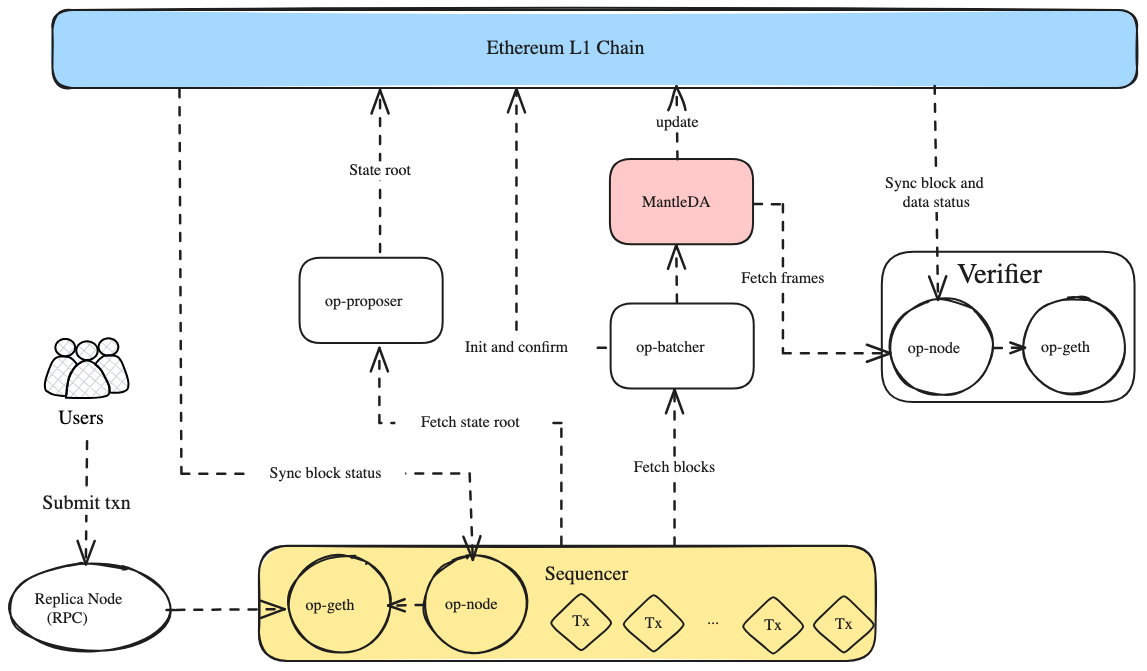
3 Likes

The current proposal has been escalated to ARFC Snapshot.

Proposal has been updated with latest Risk Parameters by Risk Service Providers.

Vote will start tomorrow, we encourage everyone to participate.

Summary

LlamaRisk is aligned with the caps and parameters presented by ChaosLabs. Below, we illustrate the current state of liquidity on the network for the proposed assets for the Aave deployment, namely USDT0, WMNT, USDC, USDe, GHO, fBTC, sUSDe, syrupUSDT, WETH, and wrsETH.

Additionally, we highlight that the liquidity bootstrapping efforts are currently in progress in order to bring the liquidity of certain asset pairs up to a level that can support these proposed caps. We will continue monitoring the liquidity growth and coordinate with Mantle’s team to ensure that sufficient liquidity targets are met to support safe deployment and scaling of the instance.

Liquidity

The heuristics that we use to determine if network liquidity is adequate to support initial supply and borrow caps are based on the following approach:

  • For assets that will be used as collateral against stablecoins, we observe the liquidity value within a 5-7.5% price impact when selling into stablecoins, recommending that liquidity is distributed between different venues rather than a single liquidity pool.
  • For assets that will be used within correlated E-Modes, the liquidity should be in the correlated pairs. The liquidation risk for these collateral-borrow pairs is greatly lower, therefore the requirements are less strict. In the context of the Mantle deployment, this applies to WETH/wrsETH, sUSDe-Stablecoins, and syrupUSDT-stablecoins.
Assets Aggregated DEX liquidity within LBs USD Value Price Impact Proposed Supply Cap
USDT0 990 000 $990 000 6.68% *50 000 000
USDC 2 800 000 $2 800 000 5.59% 10 000 000
USDe 6 500 000 $6 500 000 5.94% 20 000 000
GHO None None - *20 000 000
fBTC 10 $955,727 6.92% 50
sUSDe 4 400 000 $5 348 285 3.63% 20 000 000
syrupUSDT None None - *70 000 000
WETH 295 $927 476 4.95% *30 000
wrsETH None None - *18,000
WMNT 800 000 $754 527 8.26% 5 000 000

as of January 16th, 2026

*Note: Recommended supply cap values are well below available swap liquidity; liquidity for these assets is expected to be bootstrapped by Mantle and external entities before the market instance is deployed.

Additional Context

Following our discussions with the Mantle and TokenLogic teams, additional context is provided in this section regarding caps and liquidity plans. Assets that have a DEX liquidity that is significantly below what would reasonably support caps are intended to be supported by a number of stakeholder bootstrapping efforts. The ‘Aave effect’ of liquidity flowing to a network following an Aave deployment is also a factor we considered for the initial phase of this deployment and liquidity recommendations.

Pools

The most significant pairs for each asset are presented below. This presents liquidity depth and range across different markets to support market growth and liquidations.

USDT0

Pairs TVL DEX
USDT / USDT0 $4.40M Agni Finance
$4,512,708 Merchant Moe

Approximate Total = $8.9M

USDC

Pairs TVL DEX
USDC / USDe $1.68M Agni Finance
USDe / USDC $2,142,660 Merchant Moe
USDC / USDT $72,382 Merchant Moe

Approximate Total = $3.90M

USDe

Pairs TVL DEX
cmETH / USDe $12,984,283 Merchant Moe
sUSDe / USDe $8,398,654 Merchant Moe
USDe / USDT $6,003,178 Merchant Moe
AUSD / USDe $5,333,708 Merchant Moe
USDe / MNT $4,954,181 Merchant Moe
USDe / USDC $2,141,721 Merchant Moe
USDe / cmETH $9.24M Agni Finance
USDe / WMNT $2.30M Agni Finance
sUSDe / USDe $4.16M Agni Finance
USDC / USDe $1.68M Agni Finance
USDT / USDe $1.49M Agni Finance
USDe / COOK $906.56K Agni Finance

Approximate Total = $58.69M

fBTC

Pairs TVL DEX
FBTC / cmETH $7,848,429 Merchant Moe
FBTC / WBTC $4,136,368 Merchant Moe
FBTC / mETH $5,700 Merchant Moe
FBTC / cmETH $10.02M Agni Finance
FBTC / WBTC $2.38M Agni Finance

Approximate Total = $24.39M

sUSDe

Pairs TVL DEX
sUSDe / USDe $8,402,771 Merchant Moe
sUSDe / USDe $4.16M Agni Finance

Approximate Total = $12.56M

WETH

Pairs TVL DEX
cmETH / WETH $1,788,290 Merchant Moe
cmETH / WETH $703,111 Merchant Moe
mETH / WETH $500,389 Merchant Moe
MNT / WETH $137,735 Merchant Moe
WETH / cmETH $1.76M Agni Finance
mETH / WETH $5.84K Agni Finance

Approximate Total = $4.90M

WMNT

Pairs TVL DEX
USDe / MNT $4,954,181 Merchant Moe
MNT / USDT $1,821,470 Merchant Moe
MOE / MNT $496,922 Merchant Moe
WETH / MNT $138,167 Merchant Moe
USDe / MNT $2.27M Agni Finance

Approximate Total = $9.68M

Parameter Recommendations

Parameters have been agreed jointly with @ChaosLabs.

Disclaimer

This review was independently prepared by LlamaRisk, a community-led non-profit decentralized organization funded in part by the Aave DAO. LlamaRisk is not directly affiliated with the protocol(s) reviewed in this assessment and did not receive any compensation from the protocol(s) or their affiliated entities for this work.

The information provided should not be construed as legal, financial, tax, or professional advice.

The current ARFC Snapshot has been cancelled since proposal needed to be updated to reflect latest forum discussions.

A new ARFC Snapshot has been posted. Vote will be live tomorrow.
We apologize for the inconvenience caused and encourage everyone to vote, especially those who voted, to do so again.

1 Like

To me, deployment on Mantle is only worth it if:

  1. Promised incentive budget is not vested and is directly accessible by ACI or Ahab.
  2. We dump MNT day one for USDT / USDC or a mix of both.

My goal is not to be adversarial toward Mantle; it’s just that in the past, governance tokens of this type of chain have experienced drastic price drops.

We can then use the converted incentive budget to power the instance.
Notice that part of the incentive budget can then be used to promote wMNT borrow stable positions. And this incentive can only help counter our sell MNT effect and even permit a better buyback.